Edible Sumac &
Its Culinary Uses
(Rhus copallinum and other true sumacs)
Long before sumac became a fashionable Middle Eastern spice, North American foragers were turning the bright red berries of native sumac into tart lemonade, herbal tea, seasoning powder, and traditional remedies. The flavor is unmistakable: bright, citrusy, lightly fruity, and pleasantly sour, like lemon zest with a hint of cranberry.
This guide covers what sumac tastes like, which sumac species are edible (and which to avoid), how to make sumac powder and ground sumac at home, and easy recipes for sumac lemonade, sumac tea, sumac chicken, sumac onions, and more. If you want to grow your own, see our guide to the plant or learn how to grow winged sumac from seed.
What Is Sumac?
A quick orientation for anyone arriving here from the spice aisle.
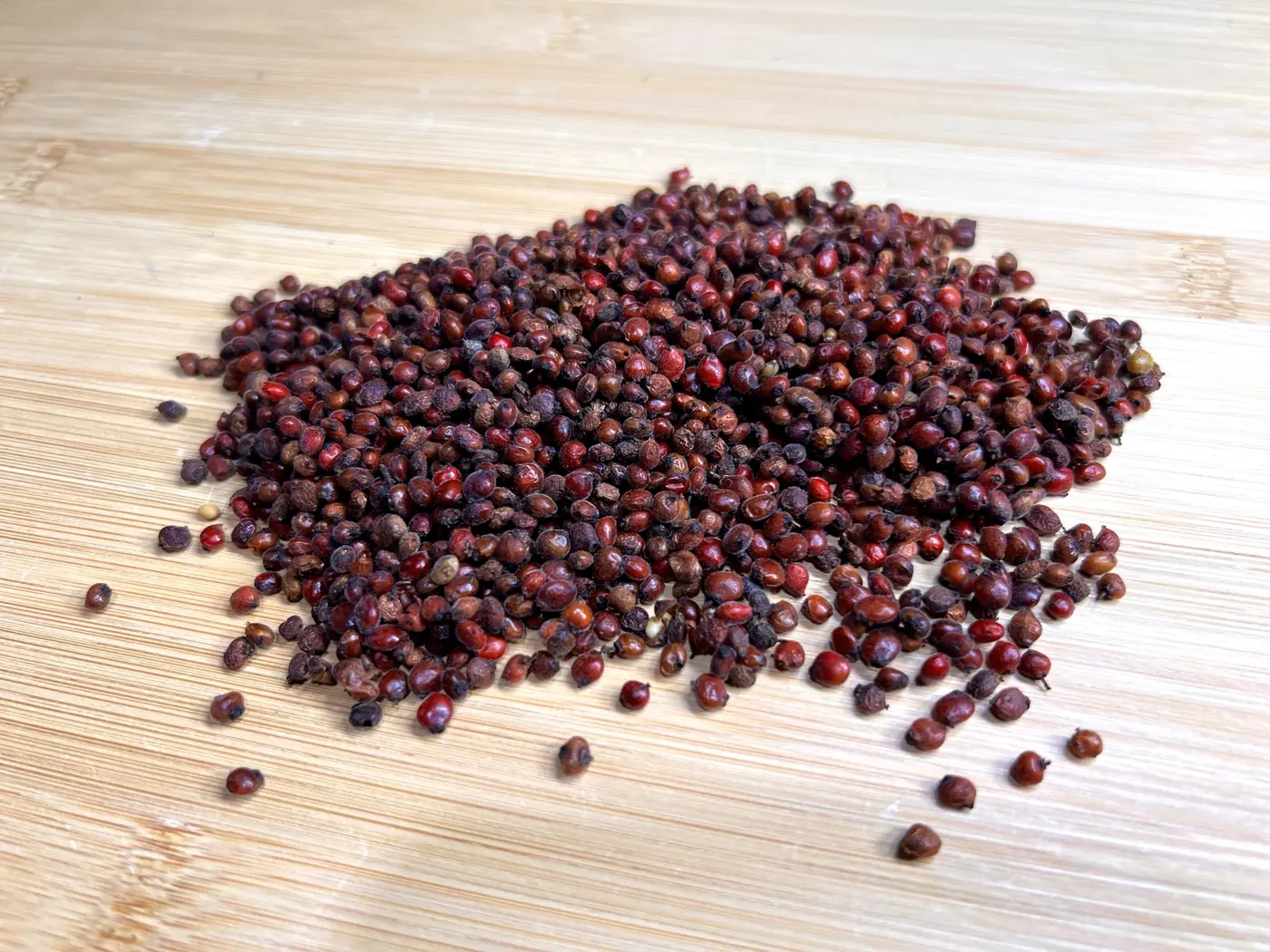
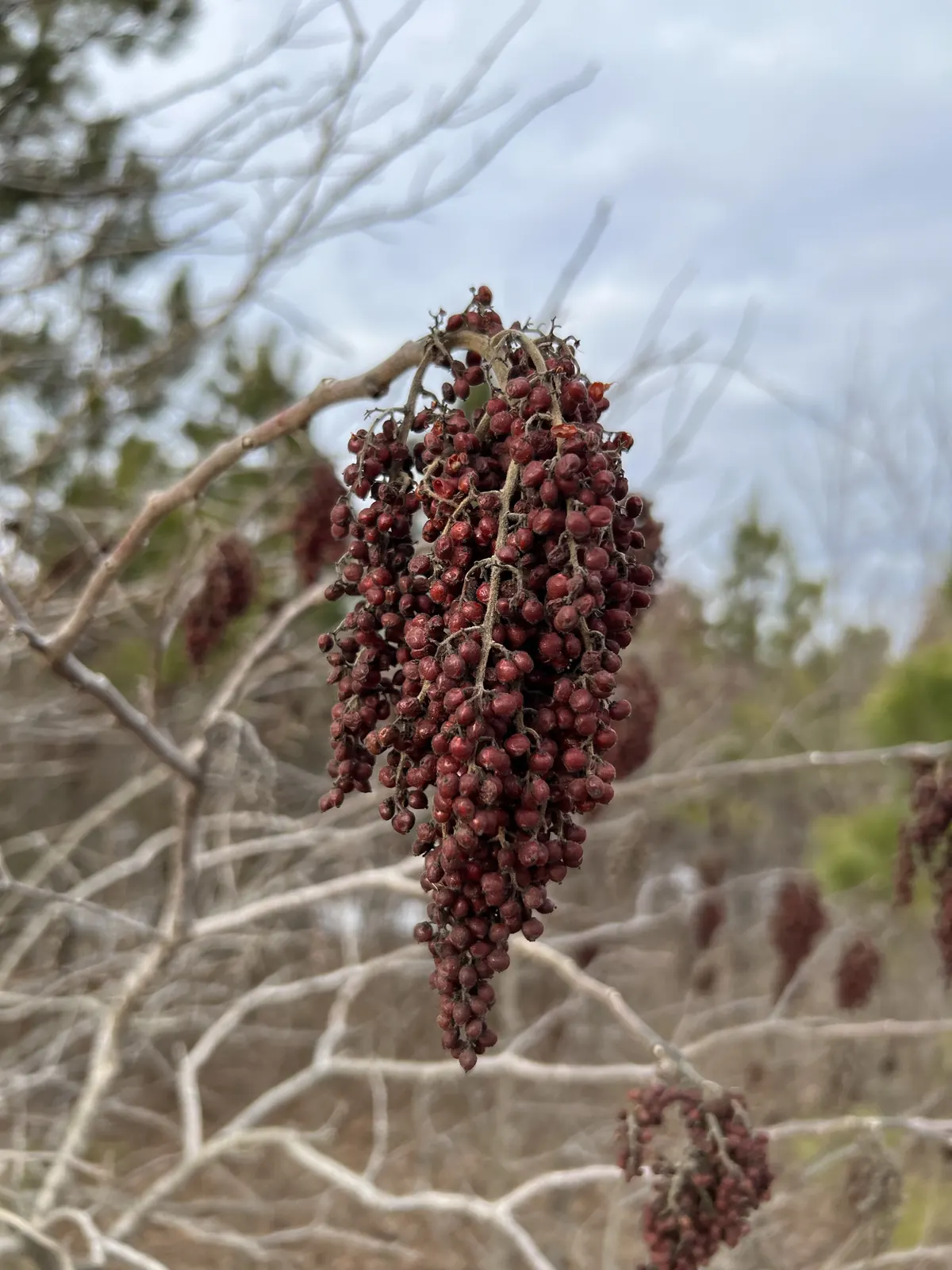
"Sumac" is the common name for a group of woody plants in the genus Rhus. The culinary versions, including winged sumac (Rhus copallinum), staghorn sumac (Rhus typhina), and smooth sumac (Rhus glabra), produce dense, cone-shaped clusters of small red berries (technically drupes) covered in a fine, tart, dust-like coating of malic acid crystals. That coating is the source of sumac's signature sour-citrus flavor.[1]
Ground sumac and sumac powder, the deep-red spice used in Middle Eastern cooking, are made by drying these berries and grinding the outer coating into a fine, brick-red powder. In North America, the same berries have been used as a souring agent and "lemonade" base by Indigenous peoples and settlers for centuries.[2]
What Does Sumac Taste Like?
Sumac's flavor is unique but easy to recognize. The fastest way to describe it: tart, lemony, and lightly fruity, with a clean finish.
Sumac tastes like a cross between lemon zest, dried cranberry, and a faint hint of unripe grape skin. It's sour without being sharp, closer to citric acid than to vinegar, and it has none of the heat, bitterness, or pungency you might associate with stronger spices.
Because the souring agent is malic acid (the same compound that makes green apples crisp), sumac plays well with rich proteins like grilled chicken, roasted lamb, oily fish, hummus, and yogurt.[1] It also brightens raw vegetables like onions, cucumbers, and tomatoes without overpowering them.
Edible Sumac vs. Poison Sumac
A short identification primer. Most "sumac" plants people meet are edible, but the name is also attached to one toxic relative, so it's worth knowing the difference.
| Species | Edible? | Quick identification |
|---|---|---|
| Winged sumac (Rhus copallinum) |
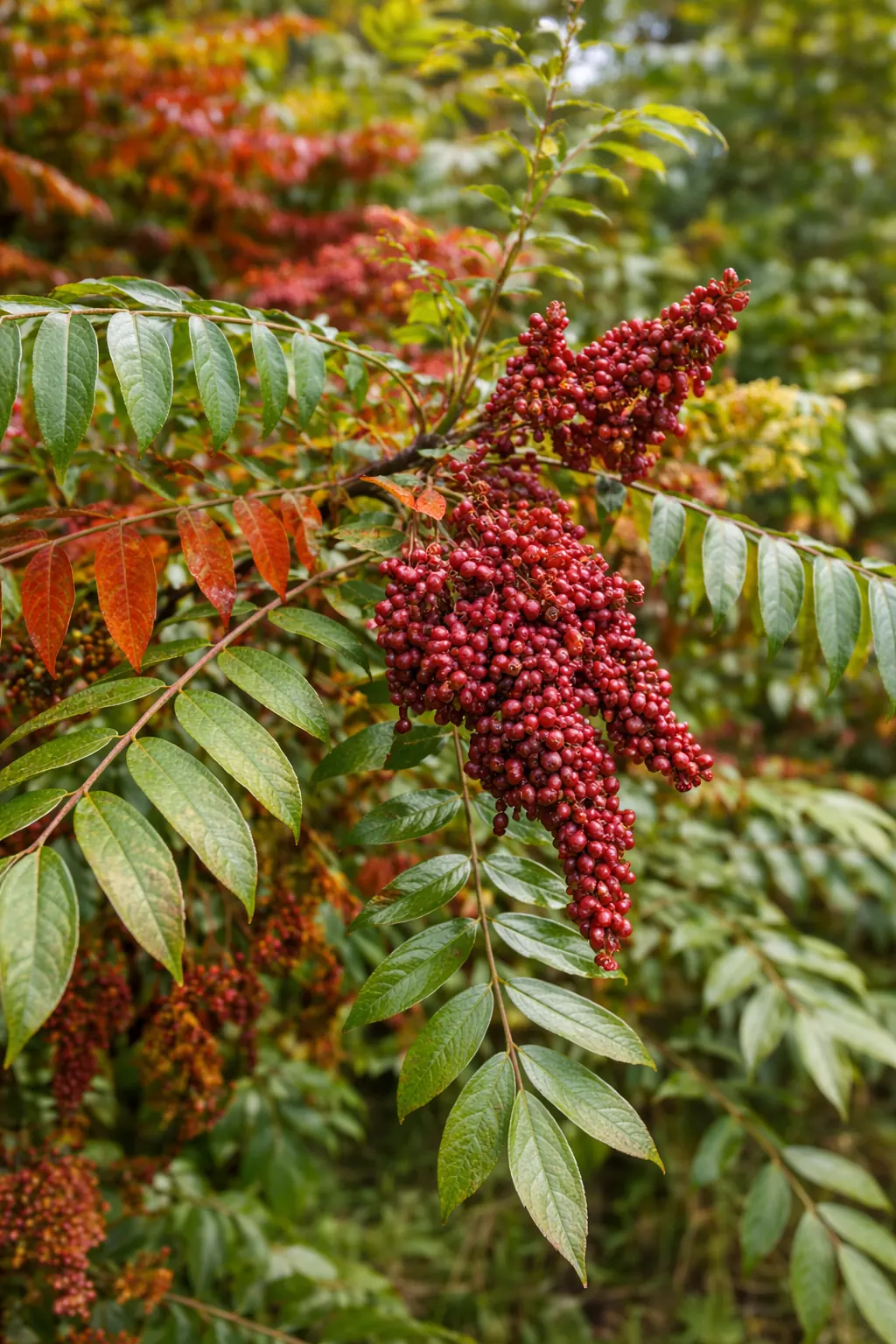
Yes | Compound leaves with small "wings" (winged rachis) between leaflets. Upright cone-shaped clusters of deep red berries. Brilliant red and burgundy fall color. |
| Staghorn sumac (Rhus typhina) |
Yes | Velvety, fuzzy stems (like a stag's antlers in velvet). Dense red berry cones at branch tips. |
| Smooth sumac (Rhus glabra) |
Yes | Smooth, hairless stems. Otherwise very similar to staghorn, same edible red berries. |
| Fragrant sumac (Rhus aromatica) |
Yes | Lower shrub with three-part leaves and small fuzzy red berries. Aromatic when crushed. |
| Poison sumac (Toxicodendron vernix) |
No, toxic | Different genus. Grows in wet swamps and bogs. Loose, drooping clusters of white or cream-colored berries (never red). Causes a severe rash on contact. |
⚠ The "Is winged sumac poisonous?" question
Winged sumac is not poisonous. Its berries are edible and have been used for food and traditional medicine for centuries. The confusion comes from sharing a common-name prefix with poison sumac, a different genus (Toxicodendron) that grows almost exclusively in wet, swampy soils and produces white berries that hang in loose, drooping clusters.
If you see upright red berry cones on a plant in a dry or upland setting, with compound leaves, you are looking at edible sumac, not poison sumac.
Sumac Powder & Ground Sumac
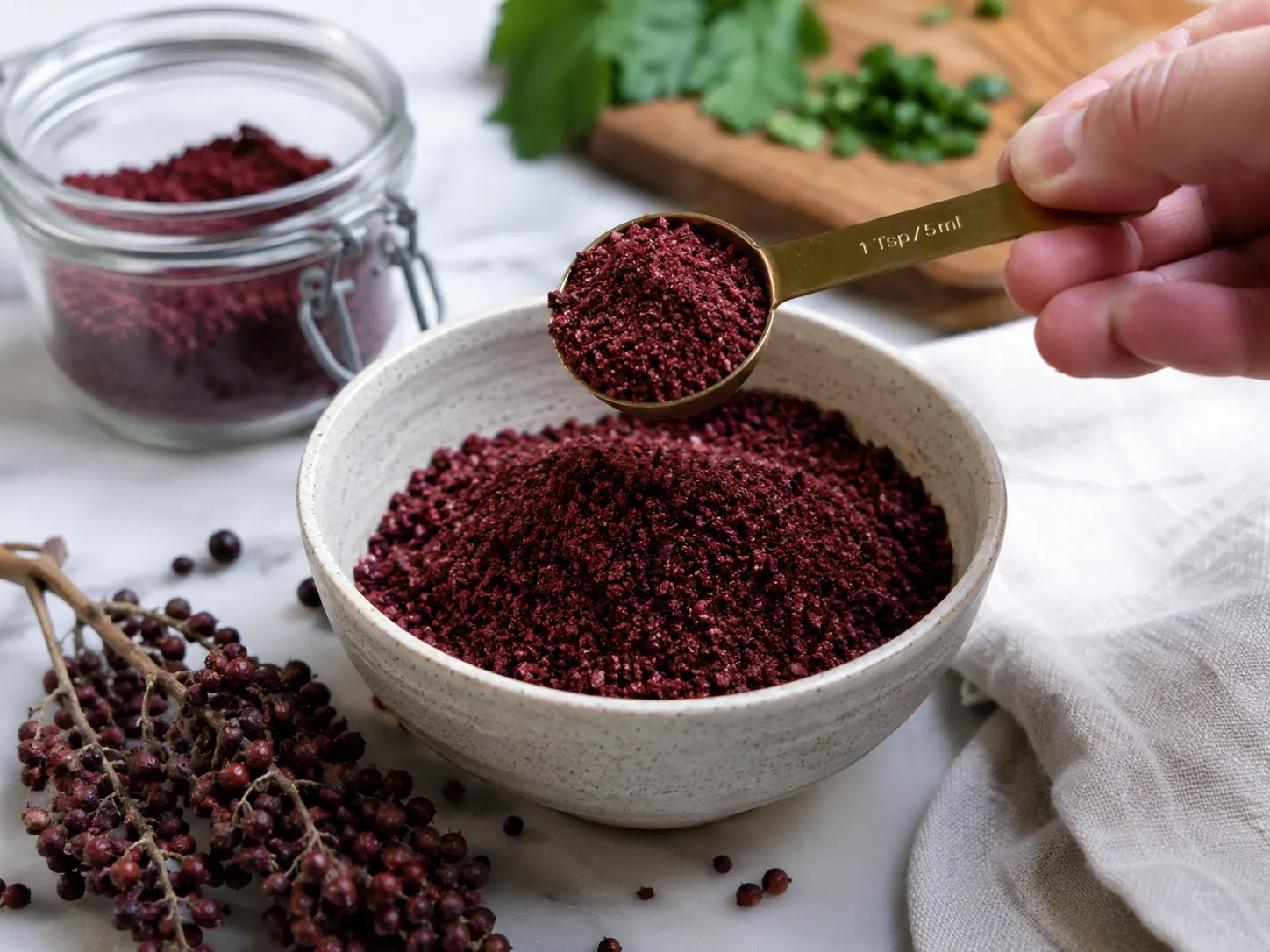
"Sumac powder," "ground sumac," and "sumac spice" all refer to the same thing: dried sumac berries (or just their outer flesh and tart coating) ground into a brick-red powder.
The flavor is concentrated and tart-lemony, with a slight fruitiness. Most commercial sumac spice is made from Rhus coriaria, the Mediterranean species. The powder you can make from native winged, staghorn, or smooth sumac is virtually identical in flavor and can be used interchangeably in any recipe that calls for sumac.
Use ground sumac the way you'd use lemon zest: as a finishing seasoning on roasted vegetables, hummus, dips, grilled meats, salads, rice, and fish. Sprinkle generously: a flat teaspoon over a finished dish is normal.
Sumac Substitute: What to Use If You Don't Have Sumac
Sumac's primary job in a dish is to add a clean, citrusy sourness without adding the liquid that lemon juice would bring. The best substitutes share that tart, fruity, dry-acid quality.
- Lemon zest (1:1). The closest single-ingredient match. Use the colored outer rind only. The white pith is bitter.
- Lemon zest + a pinch of salt. Salt helps sharpen the flavor and mimics the slight savoriness sumac has.
- Amchur (dried mango powder). Indian spice with a similar tart, fruity profile. Use 3/4 of the called-for sumac amount, since amchur is slightly stronger.
- Tamarind paste (use sparingly). Stronger and stickier than sumac, but the sour-fruity backbone is similar. Cut the amount roughly in half.
- Pomegranate molasses + lemon zest. A combination that captures sumac's tart-meets-slightly-sweet character. Especially good in Middle Eastern dishes.
For dishes that depend on sumac's color (such as za'atar or as a finishing dust on hummus), lemon zest with a small pinch of paprika gives both the brick-red visual and the citrus flavor.
"Sumac-ade" (Sumac Lemonade)
The most traditional North American sumac drink. Sometimes called "Indian lemonade" or "sumac-ade," it's been made on this continent for centuries.
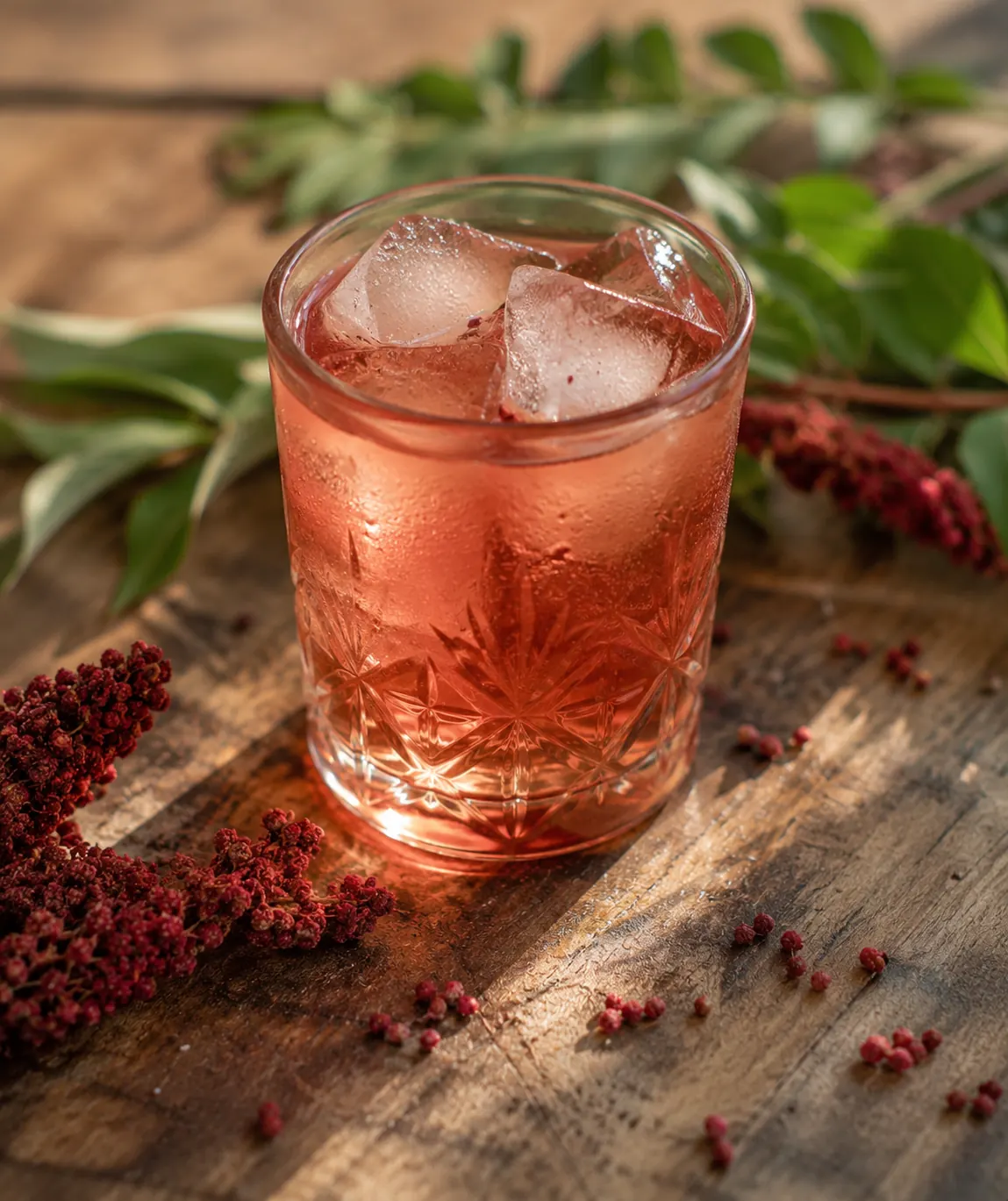
Classic Sumac Lemonade
Ingredients
- 3–4 ripe sumac berry clusters (the brighter and redder, the better)
- 1 quart (4 cups) cold water
- Honey or sugar to taste
- Optional: mint leaves, a slice of lemon
Method
- Pick sumac berries on a dry day, since the tart coating washes off in rain, and you want it intact.
- Crush the berry clusters gently with your hands and drop them into a pitcher with the cold water.
- Let steep at room temperature or in the refrigerator for 2–4 hours. Do not use hot water, as heat releases bitter tannins from the seeds and stems.
- Strain through a fine-mesh sieve or a coffee filter to remove the fine hairs from the berries.
- Sweeten to taste, add ice, garnish if you like, and serve.
Sumac Tea
Sumac tea is essentially a warm version of sumac lemonade, but the brewing technique still matters: use warm water, not boiling. Boiling water draws bitter tannins out of the seeds and woody parts of the berry cluster and ruins the flavor.
Simple Sumac Tea
Ingredients
- 1 large ripe sumac berry cluster (or 2 small)
- 2 cups warm (not boiling) water (~160°F / 70°C)
- Honey to taste
Method
- Crush the sumac cluster gently to expose the berry surfaces.
- Pour the warm water over the berries in a heatproof pitcher or French press.
- Steep 10–15 minutes, tasting at 10 minutes; the brew should be a clear rosy pink with a bright, lemony aroma.
- Strain well to remove the fine hairs. Sweeten and serve warm.
Sumac Chicken & Sumac Onions
Two of the most popular savory uses of sumac in Middle Eastern cooking. Both are built around the same idea: sumac's malic-acid tartness cuts through richness and brightens the dish.
Quick Sumac Chicken
Ingredients
- 4 boneless chicken thighs
- 2 tbsp ground sumac
- 2 cloves garlic, minced
- 3 tbsp olive oil
- Juice of 1/2 lemon
- Salt and black pepper to taste
Method
- Whisk sumac, garlic, olive oil, lemon, salt, and pepper into a marinade.
- Coat chicken thoroughly. Marinate 15 minutes to 4 hours in the refrigerator.
- Pan-sear over medium-high heat 4–5 minutes per side, until internal temperature reaches 165°F.
- Rest 5 minutes, then finish with another light dusting of sumac before serving.
Sumac Onions (Pickled-Style)
Ingredients
- 1 large red onion, thinly sliced
- 1 tbsp ground sumac
- 1 tsp salt
- Juice of 1/2 lemon
- 1 tbsp olive oil
- Chopped parsley (optional)
Method
- Toss sliced onions with salt and lemon juice in a bowl. Let sit 15–20 minutes; they'll soften and turn a bright pink.
- Drain excess liquid. Toss with sumac, olive oil, and parsley.
- Serve over grilled meats, alongside rice, or in pita sandwiches.
Za'atar: Why Sumac Is the Soul of It
Za'atar is a beloved Middle Eastern spice blend, and sumac is the ingredient that gives it its signature tart-and-savory backbone. A traditional za'atar is built around four anchors: sumac, sesame seeds, thyme (or a related herb like za'atar/wild thyme), and salt. The exact ratios vary by region, but sumac always provides the bright, lemony note that makes za'atar work.
Simple Za'atar Recipe
Ingredients
- 3 tbsp dried thyme (or oregano)
- 2 tbsp ground sumac
- 2 tbsp toasted sesame seeds
- 1 tsp salt
- Optional: 1 tsp dried marjoram
Method
- Lightly toast sesame seeds in a dry pan over low heat until golden,2 minutes. Cool fully.
- Combine all ingredients in a bowl and mix well.
- Store in an airtight jar at room temperature. Use within 3 months for best flavor.
- Sprinkle on flatbread brushed with olive oil, hummus, roasted vegetables, eggs, or yogurt dips.
Harvesting & Drying Your Own Sumac
If you grow winged sumac (or have permission to forage from staghorn or smooth sumac), making your own sumac powder is satisfying and inexpensive.
- Pick when berries are dark red, dense, and slightly sticky. Mid-to-late summer in most regions.
- Harvest on a dry day. Rain washes off the tart malic-acid coating that gives sumac its flavor.
- Cut whole berry cones with garden snips. Inspect for bugs and webbing.
- Dry indoors in a warm, ventilated spot for 7–14 days. Sun-drying works but can dull the color.
- Rub the dry berries through a coarse sieve to separate the tart outer flesh from the woody inner seeds.
- Grind the flesh in a spice grinder, then sift again through a fine-mesh strainer for a smooth red powder.
- Store in an airtight jar away from light and heat. Use within a year for best flavor.
Yield is modest: a large cluster yields maybe a tablespoon or two of finished powder, but it's the freshest sumac you'll ever cook with.
Beyond the Kitchen: Historical & Cultural Uses
Winged sumac has a long and varied human history across the eastern United States, both as a food and as a working plant.
Indigenous beverages and seasoning
Long before commercial soft drinks, the Cherokee and many other Indigenous peoples soaked winged sumac drupes in cool water and sweetened the resulting tart, lemon-like infusion with honey. This was the original "sumac-ade." The dried berries were also ground and used as a spice in marinades and seasoning blends, paralleling the Middle Eastern use of Rhus coriaria in za'atar. In some traditions, crushed sumac berries were even added to ordinary drinking water to improve its flavor.
Traditional medicinal preparations
Across many Native American traditions, winged sumac had a wide medicinal vocabulary. Crushed berries were used as a mouthwash and a rinse for mouth sores; berry preparations were used for dysentery and other gastrointestinal complaints; leaf and bark preparations were used for skin conditions; and a sumac tea was sometimes given to nursing mothers. (None of these traditional uses are medical advice. They are history, not prescription, but they speak to how deeply the plant is woven into the ecological and cultural landscape of eastern North America.)
The tanning industry
Winged sumac bark and leaves contain high concentrations of tannin and were historically harvested for the leather-tanning industry, particularly in the southeastern U.S. Leaves were collected, dried, and ground into a powder used to treat hides. Though synthetic tanning agents have largely replaced plant tannins, the historical use is a reminder of just how chemically rich the plant is.
Grow Your Own Edible Sumac
The shortest path to a steady annual supply of fresh sumac berries is to plant a few winged sumac shrubs of your own. Hardy, drought tolerant, and productive year after year once established.
Shop Seed PacksSources
4 references- USDA NRCS Plant Guide and USDA Forest Service, FEIS species reviews for the Rhus genus (chemistry of the drupe coating, malic-acid souring agent, edibility of native sumacs). research.fs.usda.gov/feis/species-reviews/rhucop
- USDA NRCS Plant Fact Sheet for winged sumac (historical Indigenous and settler uses of the berries for beverages, seasoning, and traditional medicine across North America). eec.ky.gov/Natural-Resources/Forestry/ky-champion-trees/Documents/Sumac winged.pdf
- USDA Forest Service, FEIS, Rhus glabra and Rhus copallinum species reviews (interchangeability of native culinary sumacs; comparison with Mediterranean Rhus coriaria used in commercial spice). research.fs.usda.gov/feis/species-reviews/rhugla
- Native American Ethnobotany Database (BRIT). Ethnobotanical records of Rhus copallinum uses by Cherokee, Choctaw, and other peoples of the Southeast and Eastern Woodlands. naeb.brit.org/uses/species/3242