Wildlife Benefits
Few native shrubs deliver as much wildlife value per square foot as winged sumac. The flowers feed native bees and beneficial insects through midsummer. The berry cones feed more than twenty species of birds from late summer well into winter. The dense, suckering growth provides nesting cover, shelter, and habitat, all on a plant that requires almost no maintenance once established.
If you're planting for birds, pollinators, or a healthy native plant community, winged sumac belongs on the short list. Learn more about the plant or how to grow it from seed.
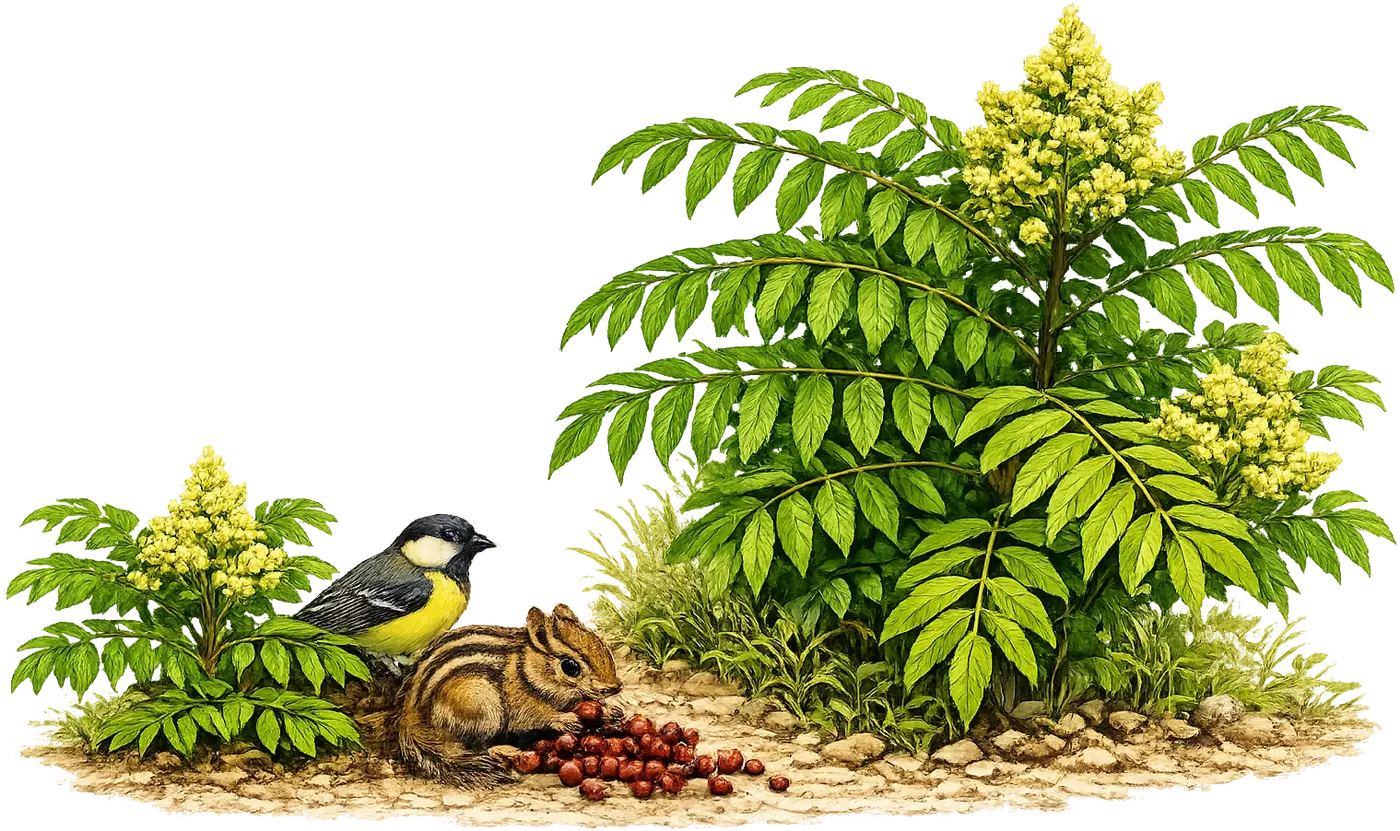
Cedar waxwings, robins, bluebirds, chickadees, and many more rely on the persistent red berry cones from late summer through winter.
Mid-summer flower panicles feed a wide range of native bees, wasps, hoverflies, and beneficial beetles.
Pollinator food in summer, fruit for birds in fall, persistent winter food, and dense cover for nesting in spring.
A Bird-Feeding Powerhouse
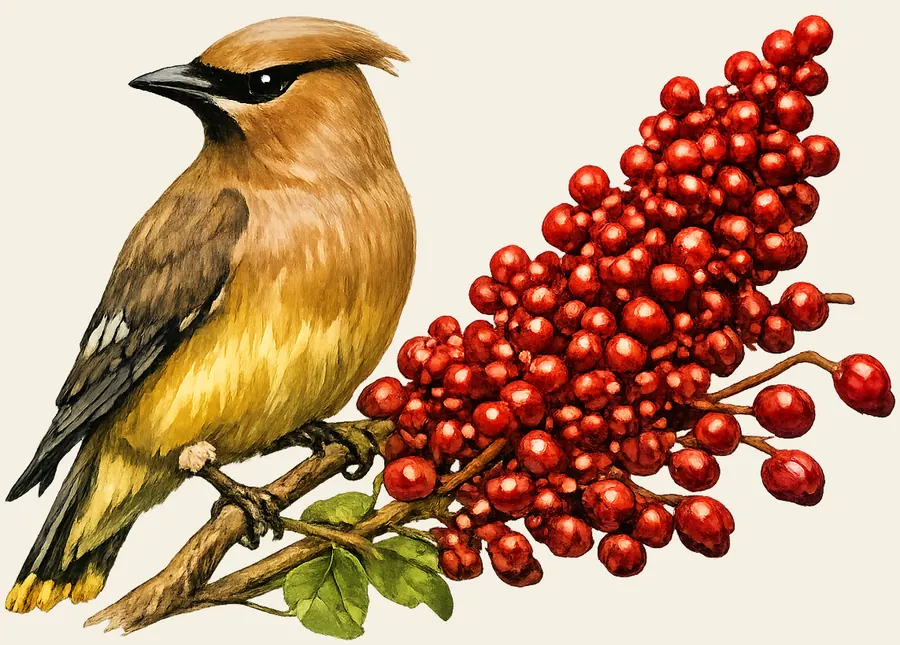
Winged sumac is one of the most reliable winter food sources for songbirds in the eastern half of North America. The dense, upright berry cones ripen in late summer and persist through fall and winter, long after softer fruits have been stripped from the landscape.[1]
The tart red coating on the berries is rich in vitamin C and other nutrients that help birds maintain condition through the cold months when food is scarce.
Bird species commonly seen feeding on winged sumac[2]
- Cedar waxwings
- American robins
- Eastern bluebirds
- Black-capped chickadees
- Tufted titmice
- Northern cardinals
- Northern mockingbirds
- Gray catbirds
- Brown thrashers
- Wood thrushes
- Hermit thrushes
- Eastern towhees
- Dark-eyed juncos
- White-throated sparrows
- Pileated woodpeckers
- Downy woodpeckers
- Ruffed grouse
- Wild turkeys
- Ring-necked pheasants
- Northern bobwhites
The fine hairs on the berry coating slow consumption, which is why the cones can persist for months. Birds visit and revisit the same plant across the cold season rather than stripping it in a single afternoon.
Quietly Excellent for Pollinators
Winged sumac flowers are easy to overlook: small, greenish-yellow, gathered in upright panicles in midsummer. They aren't showy in a human-pleasing way, but they are exceptional pollinator food.
When sumac is in bloom, the panicles hum: native bumblebees, sweat bees, mason bees, honeybees, paper wasps, hoverflies, soldier beetles, and many other beneficial insects all visit the flowers heavily. Sumac is considered a major nectar plant by beekeepers across its native range, and the late-summer timing fills a gap when many spring-blooming flowers have already faded.[3]
If you're building a pollinator garden, planting winged sumac gives you a single source of nectar that supports a wide diversity of insects across several weeks of summer. The berries that follow are also edible for you, used for centuries to make sumac lemonade, tea, and spice powder.
A Critical Larval Host Plant
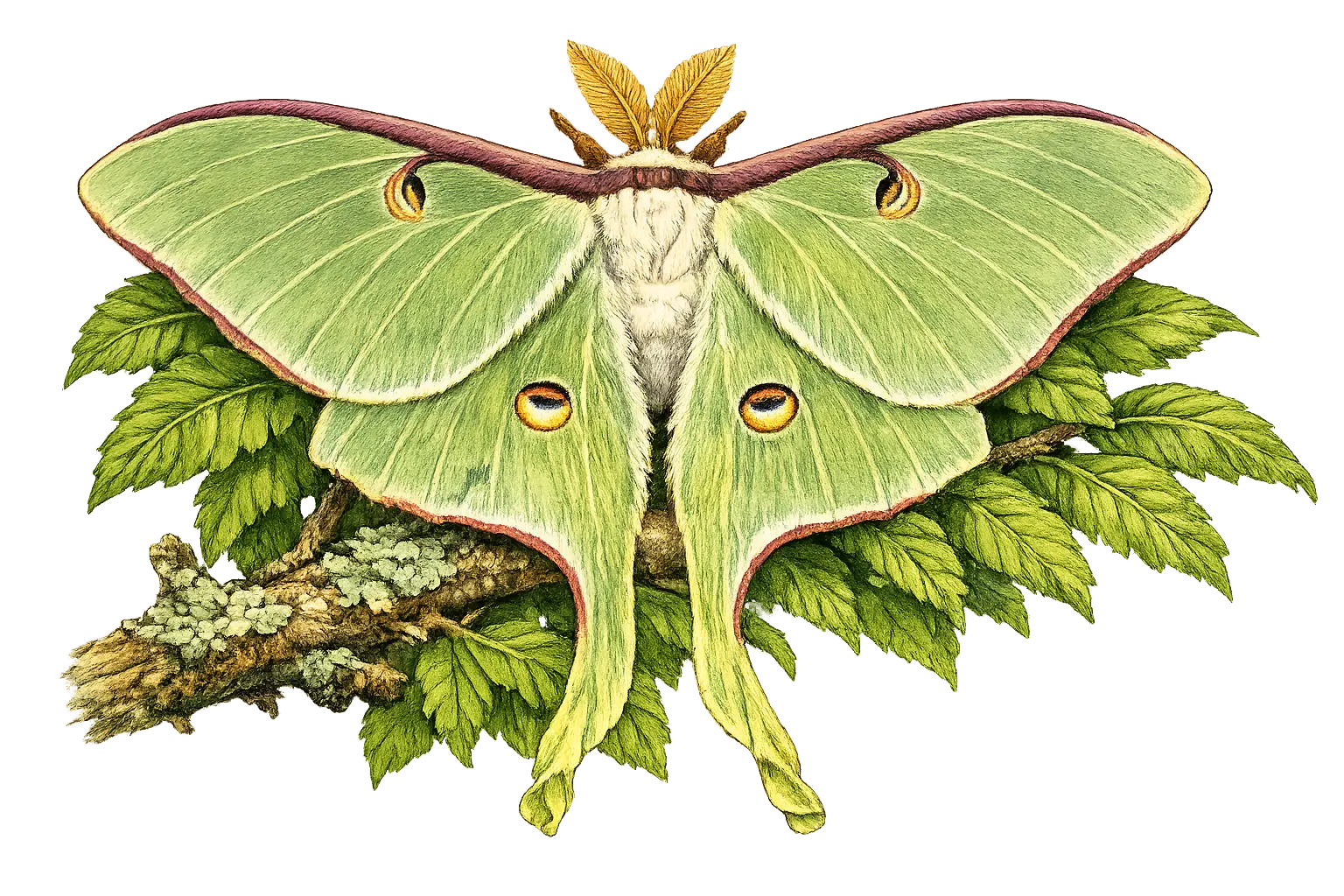
Winged sumac is more than a nectar source. It's an essential larval host plant for several native butterflies and moths. The caterpillars of the Red-Banded Hairstreak butterfly (Calycopis cecrops) and the Luna moth (Actias luna) feed on sumac foliage and leaf litter, and several other moth species use sumac as well.[4]
This matters because most adult insects can only lay eggs on the specific native plants their caterpillars co-evolved with. Without native host plants like winged sumac, these species can't complete their life cycle, no matter how many ornamental flowers are nearby. Planting native host plants is the cornerstone of a pollinator-friendly landscape, and winged sumac is one of the easiest to add.
Cover, Nesting, and Habitat Structure
Beyond food, winged sumac is one of the best small-scale habitat shrubs you can plant. Its multi-stem, suckering growth habit creates dense thickets that work as:
- Nesting cover for songbirds, especially mid-canopy nesters like brown thrashers and gray catbirds.
- Roosting cover for sparrows and other small birds during cold winter nights.
- Protective shelter for rabbits, ground squirrels, and other small mammals.
- Edge habitat where the boundary between an open field and a wooded area creates the highest biodiversity of any landscape feature.
The plant also tolerates browsing better than most ornamentals. Deer will sample it occasionally but rarely return, which means it stays intact as cover even in deer-heavy areas.
If you manage land for hunting, winged sumac has a separate set of documented uses for wild turkey, bobwhite quail, ruffed grouse, white-tailed deer, and cottontail rabbits. See our guide to winged sumac for game habitat and food plots for sourced details on game-species use, brood cover, recommended spacing for habitat thickets, and prescribed-burn management.
Spring
New compound leaves emerge bronze-green. Multi-stem shape provides shelter for early nesting songbirds.
Summer
Midsummer flower panicles feed native bees, wasps, hoverflies, and beneficial insects across several weeks of bloom.
Fall
Berry cones ripen to deep red. Cedar waxwings, robins, and bluebirds begin feeding. Brilliant foliage offers an extra signal.
Winter
Persistent red berry cones become essential cold-season food when softer fruits are gone. Dense stems provide winter roost cover.
Why Native Plants Like Winged Sumac Matter
Native plants and the wildlife around them evolved together. A native shrub like winged sumac doesn't just feed birds and pollinators. It feeds the right birds and pollinators for its ecosystem, at the right time of year, with the right food chemistry. Non-native ornamentals often look similar but are ecological dead ends: visited rarely, fed on poorly, supporting almost no wildlife.
Across the United States, native bird populations have declined by an estimated three billion individuals since 1970, driven largely by habitat loss and a decline in native plant communities. Adding even one productive native shrub to a residential yard contributes directly to reversing that trend.
Winged sumac is among the highest-return native shrubs you can plant for wildlife: high food value, long seasonal availability, dense structural cover, and remarkable toughness in landscapes where most ornamentals fail.
Companion Plantings for a Wildlife-First Landscape
Winged sumac shines on its own, but it shines brighter alongside other native plants that fill seasonal gaps and broaden the habitat structure. Strong pairings include:
- Coneflowers, asters, and goldenrod, extend the pollinator-food season from spring through fall.
- Switchgrass and little bluestem, native grasses add ground-level cover and seed for sparrows and quail.
- Eastern red cedar or American holly, provide dense evergreen winter cover near sumac's berry supply.
- Serviceberry or chokeberry, earlier-ripening fruit shrubs that extend the bird-food calendar.
- Milkweeds and native violets, host plants that support monarchs and fritillary butterflies near sumac's nectar supply.
Plant Winged Sumac for Wildlife
Hand-harvested seeds from native stands. Pack sizes from 200 seeds for a small starter quantity to 3,000 seeds for habitat restoration and pollinator strips.
Shop Seed PacksSources
5 references- USDA Forest Service, Fire Effects Information System (FEIS). Rhus copallinum species review (winter food persistence on the plant; documented wildlife use across small mammals and birds). research.fs.usda.gov/feis/species-reviews/rhucop
- NC State Extension Gardener Plant Toolbox. Rhus copallinum profile (extensive list of bird species that feed on the drupes, including songbirds and upland game birds). plants.ces.ncsu.edu/plants/rhus-copallinum
- Lady Bird Johnson Wildflower Center. Rhus copallinum species profile (pollinator value, nectar source for native bees, wasps, and beneficial insects). wildflower.org/plants/result.php?id_plant=RHCO
- USDA Forest Service, Fire Effects Information System (FEIS). Rhus copallinum species review (larval host-plant role for Red-Banded Hairstreak butterfly and Luna moth; broader Lepidoptera community). research.fs.usda.gov/feis/species-reviews/rhucop
- Virginia Native Plant Society. Winged sumac wildlife and ecological profile. vnps.org/winged-sumac-rhus-copallinum