




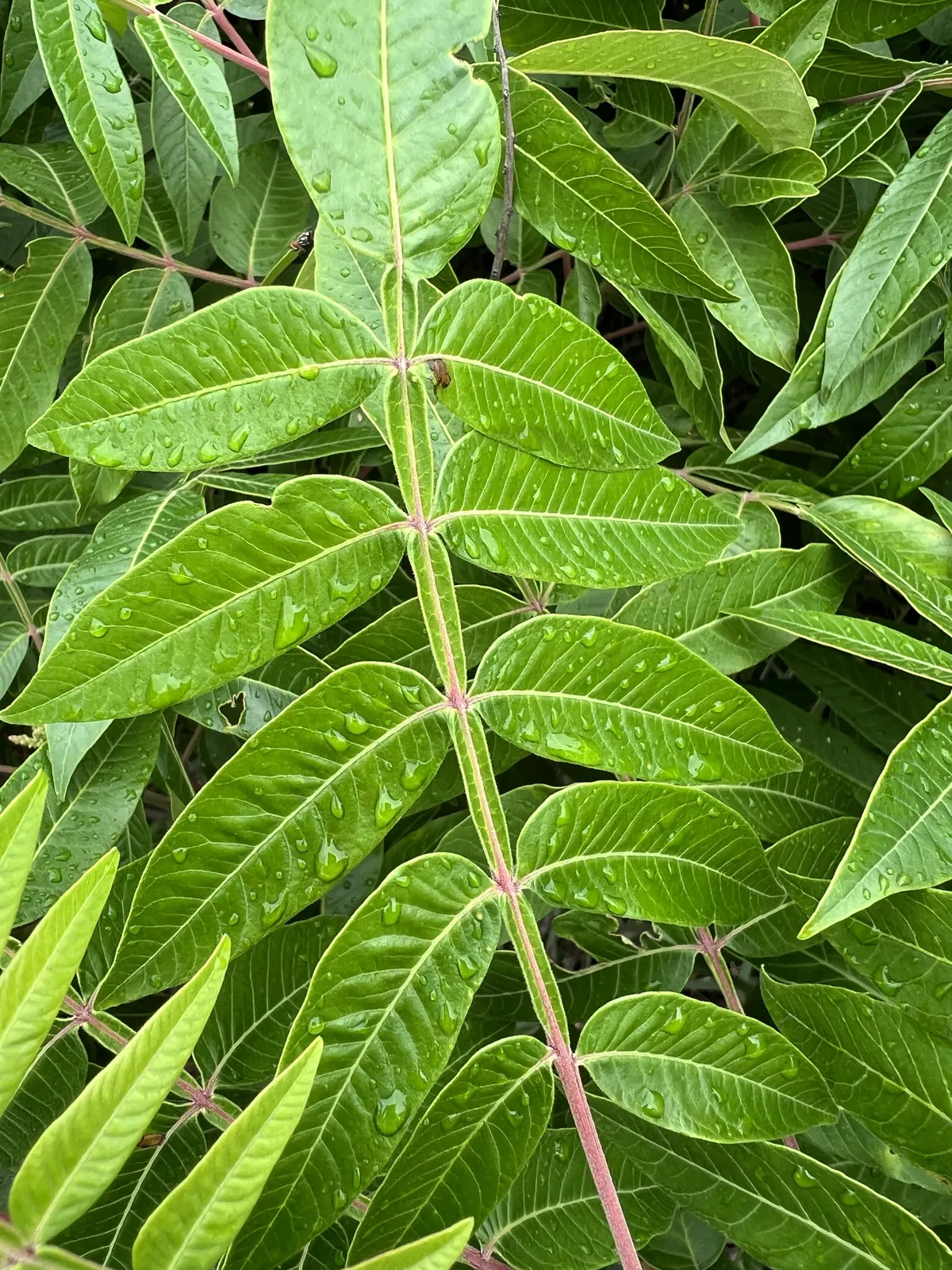
Winged Rachis
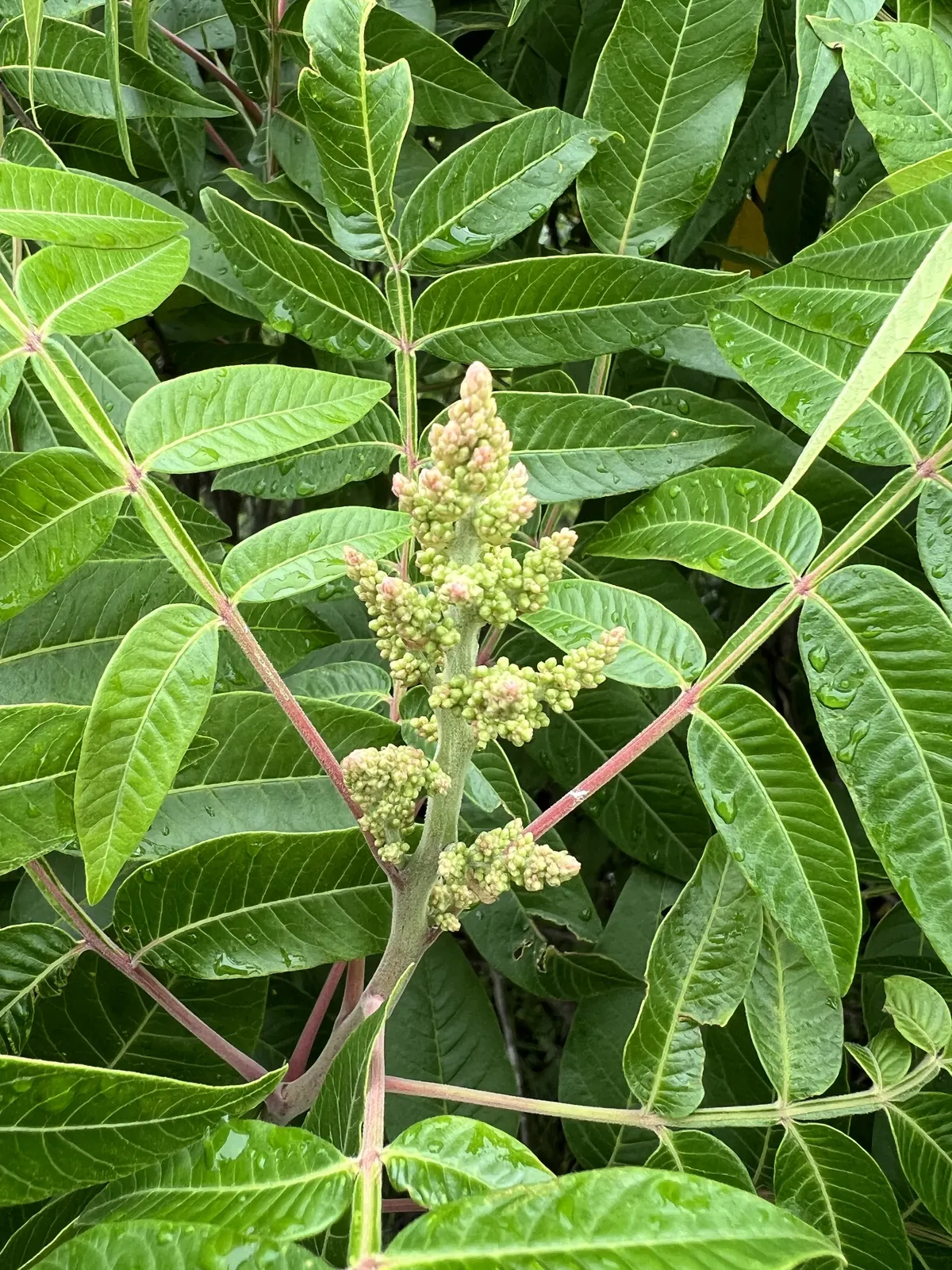
Compound leaves with 9–21 lance-shaped leaflets, separated by small strips of leaf tissue ("wings") along the central stem. No other native sumac has these wings.
 WingedSumac.com
Winged sumac is a tough, fast-growing native shrub valued for three things: brilliant red and burgundy fall foliage, upright cones of edible red berries that draw more than twenty species of birds, and an almost unkillable constitution in poor, dry, rocky soil.
It's a small-tree-sized shrub for most landscapes (6–15 feet tall, occasionally taller), with compound leaves that have small "wings" of leaf tissue along the central stem, the feature that gives the plant its name.
Three features together reliably identify winged sumac (Rhus copallinum) in the field:
Compound leaves with 9–21 lance-shaped leaflets, separated by small strips of leaf tissue ("wings") along the central stem. No other native sumac has these wings.
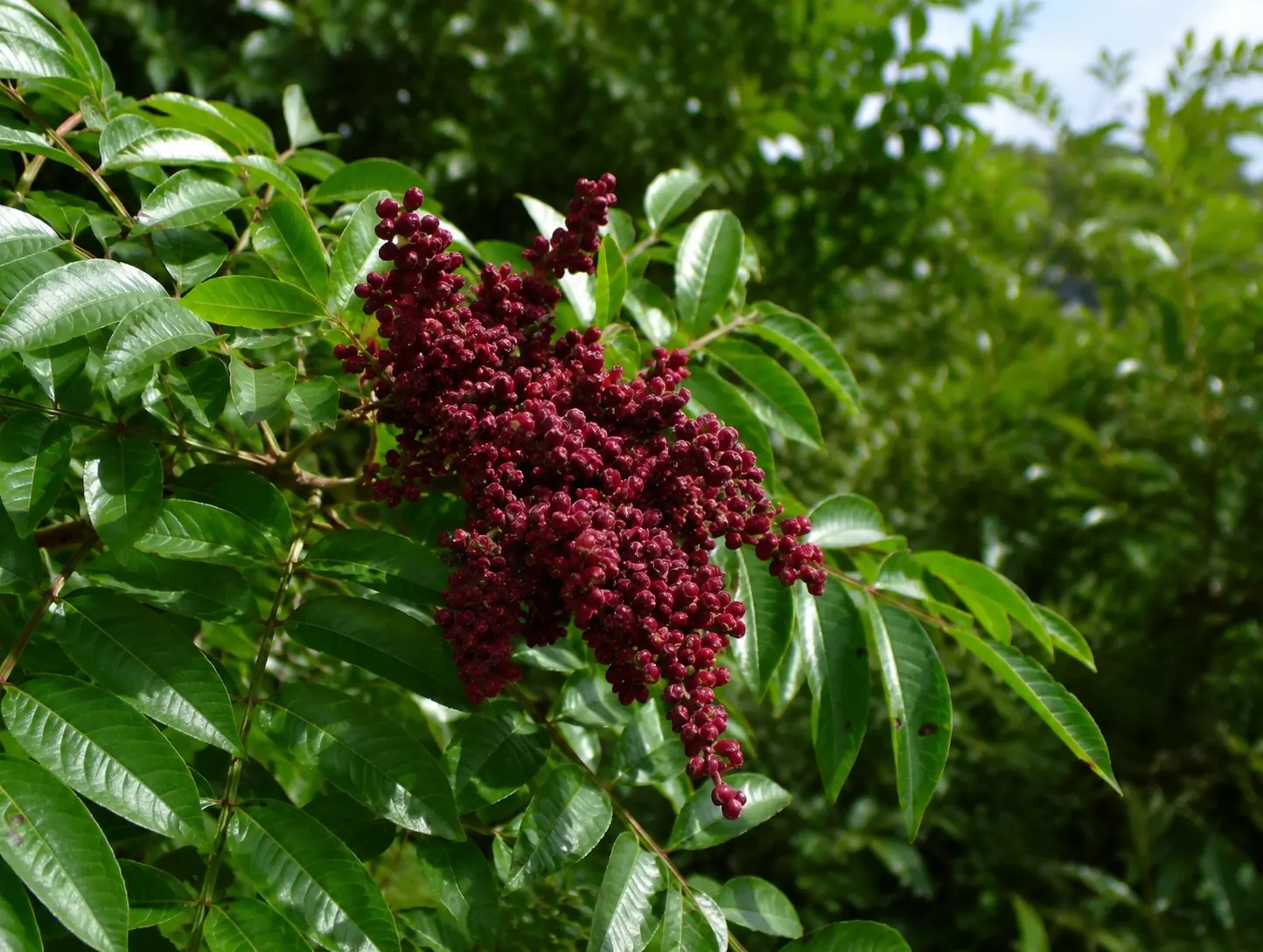
Tight, cone-shaped clusters of small drupes that emerge greenish and ripen to a deep crimson over the course of summer. The cones stand upright on the branches and persist through winter as bird food.
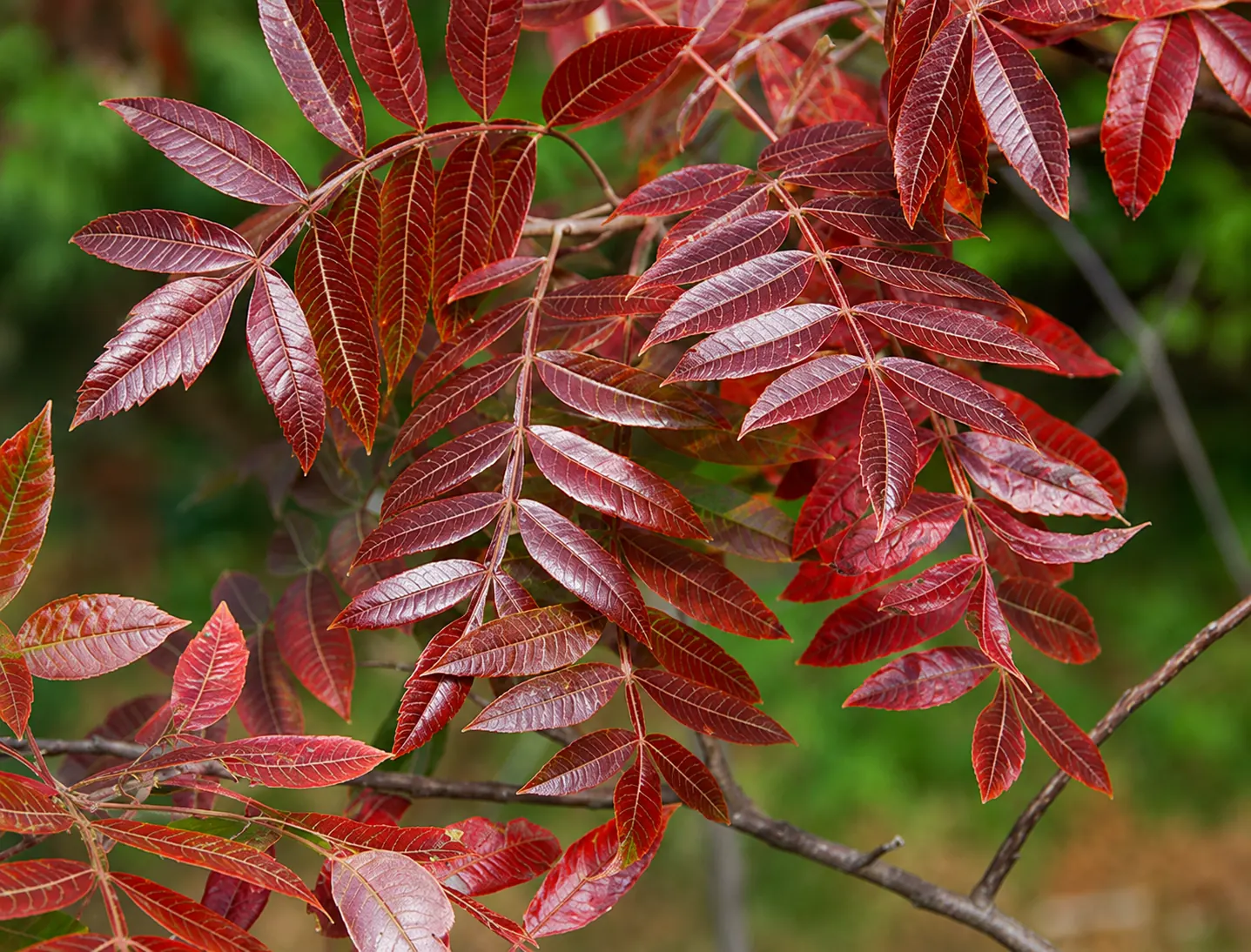
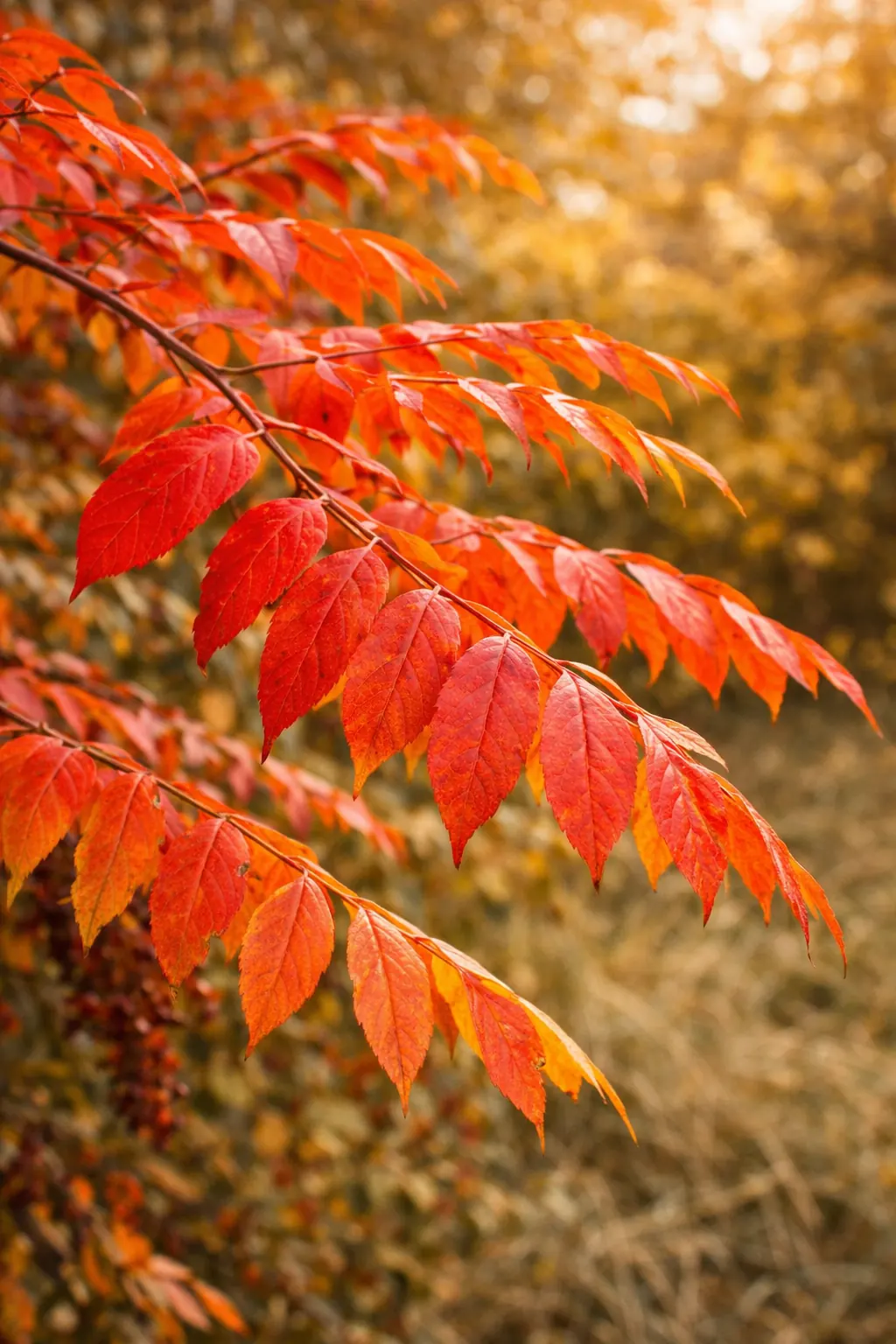
One of the showiest native shrubs in autumn. Compound leaves turn glossy scarlet, crimson, and burgundy weeks before most surrounding hardwoods change color.
The species name copallinum comes from "copal," an old word for fragrant tree resin. It refers to the plant's sap, which oxidizes and turns black on exposure to air, a small but distinctive feature you may notice if you ever prune one. The genus name Rhus is the ancient Greek and Latin name for sumac.
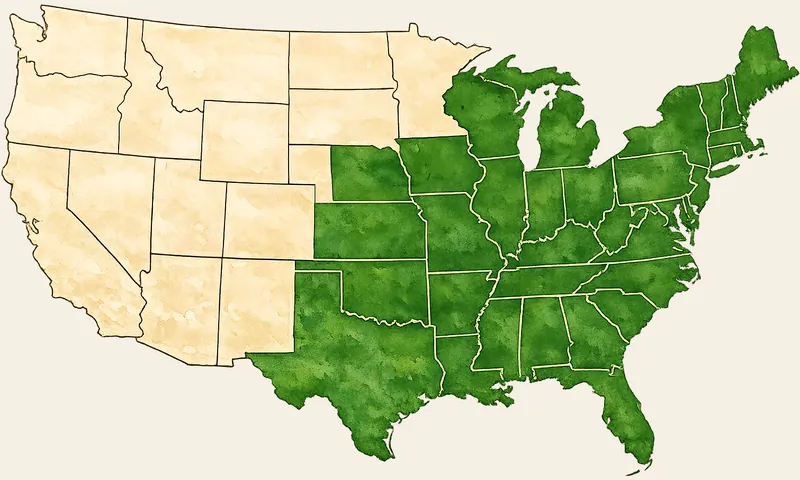
Winged sumac is native to a large portion of the central and eastern United States and into eastern Canada. It's especially common from Texas and Oklahoma east to the Atlantic coast, and from Florida north to Maine and southern Ontario.[1]
It thrives in dry uplands, old fields, fencerows, prairie edges, rocky slopes, and recently disturbed ground. You can spot it along highways across the southeastern U.S., where its fall color often stands out as the brightest red in the landscape.
Outside of its native range, winged sumac is hardy in USDA zones 4 through 9, which covers most of the continental United States. It is widely planted as an ornamental and conservation shrub beyond its native footprint.
Winged sumac is one of the easier native shrubs to grow. Its preferences are wide and its tolerance for stress is unusually high.
Winged sumac is a classic pioneer species, among the first natives to colonize burned ground, abandoned fields, roadcuts, and other disturbed sites. It's well adapted to fire: heat scarifies the hard seed coat and stimulates germination, and aboveground plants resprout vigorously from their root crowns after a burn. In long-fire-suppressed landscapes, individual colonies eventually decline as competing canopies close overhead, which is why open, sunny edges are where sumac thrives.[2]
If you're considering winged sumac for landscape use, see our complete planting guide for step-by-step instructions on growing from seed.
Mature size: A mature winged sumac reaches 6–15 feet tall. The canopy spreads roughly 10–20 feet wide on a relatively narrow base. The trunk itself stays slender, while the upper branches reach outward.[3] In ideal conditions or as a small tree form, individuals can occasionally reach 20–25 feet tall. Older stands also expand sideways over time via root suckers (see Spacing below).[2]
Growth rate: Fast. Expect 1–3 feet of new growth per year once established, sometimes more in warm climates with good moisture.[4] Modest first-year growth is normal. Young plants invest heavily in root systems before pushing top growth.
Lifespan: Individual stems live 15–25 years, but the plant continues indefinitely through root suckering. The colony as a whole can be effectively permanent. Older central stems naturally die back as younger ones replace them.
Spacing: If suckering is welcome (slopes, restoration plantings, hedgerows), space 6–10 feet apart and let the colony fill in. If you want a single specimen, plant at least 15 feet from anything you don't want it to invade, and mow back suckers as they appear.
Spring: New compound leaves emerge a glossy bronze-green.
Mid-summer: Pyramidal panicles of small, greenish-yellow flowers open. They're modest in appearance but support a wide range of native bees, beneficial insects, and other pollinators.
Late summer: Berries form, first green, then ripening to a dense, deep red. Tight upright cones persist on the plant.
Autumn: The signature fiery foliage. Leaves shift through orange, scarlet, deep crimson, and burgundy over a few weeks, often well before surrounding hardwoods.
Winter: Bare gray-brown stems with the red berry cones still upright on the branch tips, offering food for birds and wildlife and visual interest in a stripped-back landscape. The same berries are also edible for people.
Two sexes, one healthy stand. Winged sumac is dioecious, meaning each plant grows up as either male or female. Males produce nectar-rich flowers that feed pollinators; females produce the signature red berry cones. Because every one of our seed packs contains hundreds of seeds, your stand is guaranteed a healthy mix of both sexes, and a reliable berry crop year after year.
"Sumac" gets applied to several native species and one famous non-sumac (poison sumac). Here's how winged sumac compares.
| Species | Mature size | Distinguishing features |
|---|---|---|
| Winged sumac (Rhus copallinum) |
6–15 ft | Compound leaves with winged rachis. Upright red berry cones. Edible. Brilliant fall color. Tolerates very poor soil. |
| Staghorn sumac (Rhus typhina) |
15–25 ft | Velvety fuzz on young twigs (like deer antlers in velvet). Larger compound leaves, no winged rachis. Edible. |
| Smooth sumac (Rhus glabra) |
10–20 ft | Smooth, hairless twigs. Otherwise similar to staghorn. Edible. |
| Fragrant sumac (Rhus aromatica) |
2–6 ft | Low spreading shrub. Three-part leaves instead of pinnately compound. Aromatic when crushed. Edible. |
| Poison sumac (Toxicodendron vernix) |
5–20 ft | Different genus. Grows in swamps and bogs. Drooping white berry clusters. Causes severe rash on contact. |
For a deeper look at the culinary side, including how winged sumac berries are used to make sumac powder, sumac lemonade, and sumac tea, see our guide to edible sumac and its culinary uses.
No. Winged sumac is not poisonous, neither to touch nor to eat. The confusion comes from sharing a common-name prefix with poison sumac (Toxicodendron vernix), which is a different genus. The fastest way to tell them apart: winged sumac has upright red berry cones on a plant of dry uplands; poison sumac has drooping white berries on a plant of wet swamps.
Yes. The red berry coating has been used for centuries to make sumac lemonade, sumac tea, and sumac spice powder. The flavor is bright and lemony from natural malic acid in the berry coating. See our full guide to edible sumac and its culinary uses for recipes.
Winged sumac is native to much of the central and eastern United States, so by definition it is not invasive within that range. It is, however, an aggressive native, it spreads readily by root suckers and can form large colonies if not managed. Plant it where colonizing behavior is welcome (slopes, hedgerows, restoration plantings) or be prepared to mow back suckers if you want a single specimen.
Yes. Winged sumac is native to a large area of the central and eastern United States, from Texas and Oklahoma east to the Atlantic, and from Florida north to Maine and southern Ontario.
Most plants reach 6–15 feet tall with a canopy spreading roughly 10–20 feet wide on a relatively narrow base. The trunk itself stays slender; the apparent "width" is the canopy of upper branches. Older stands also expand sideways via root suckers. In ideal conditions or trained as a small tree, individuals can occasionally reach 20–25 feet.
Winged sumac has a long history of traditional and folk-medicinal use. Native peoples and early settlers used preparations of the berries, bark, and leaves for sore throats, fevers, and as an astringent gargle, among other applications. This site is not a medical source and does not provide medical advice. Always consult a qualified healthcare professional before using any plant as medicine.
Few native shrubs deliver as much wildlife value per square foot. The flowers feed pollinators in summer; the berries feed more than twenty bird species through fall and winter; and the dense growth provides nesting cover and shelter. See our wildlife benefits page for the full picture.
Deep, spreading roots and aggressive sucker growth make winged sumac one of the best native plants for stabilizing dry slopes, road cuts, and disturbed land where most ornamentals would struggle.
Spaced 6–10 feet apart, winged sumac forms a dense, suckering hedgerow over a few seasons. The result is fall color, summer pollinator activity, and winter bird food along a single planting line.
Used as a specimen, winged sumac is among the most reliable native sources of fiery red, scarlet, and burgundy autumn color, often peaking weeks before surrounding hardwoods.
Winged sumac thrives in conditions where most plants fail: thin rocky soil, recently disturbed ground, old fields, and former agricultural land. It's a foundational species for prairie edges, woodland margins, and wildlife corridors.
On hunting properties, winged sumac functions as a supporting habitat plant for wild turkey, bobwhite quail, ruffed grouse, white-tailed deer, and cottontail rabbits, providing late-winter food, brood cover, and woody edge habitat along food plots and field margins. See our game habitat and food plots guide for sourced details on game-species use, recommended thicket spacing, companion plants, and prescribed-burn management.
Our hand-harvested seeds come from native stands and ship free, in pack sizes from 200 seeds for a small starter quantity to 3,000 seeds for habitat restoration and pollinator strips.
Shop Seed PacksDownload our heritage field guide. Plant identification, wildlife benefits, native range map, and seed-care basics. No email required.
Download the Guide (PDF)