How to Scarify and Cold Stratify Native Seeds
A lot of native seeds will not sprout just because you put them in warm, damp soil. They are wild plants, and many of them wait for a signal first: a hard coat that has to wear down, a winter that has to pass, or both. Scarifying and cold stratifying are simply ways of giving them those signals on your own schedule.
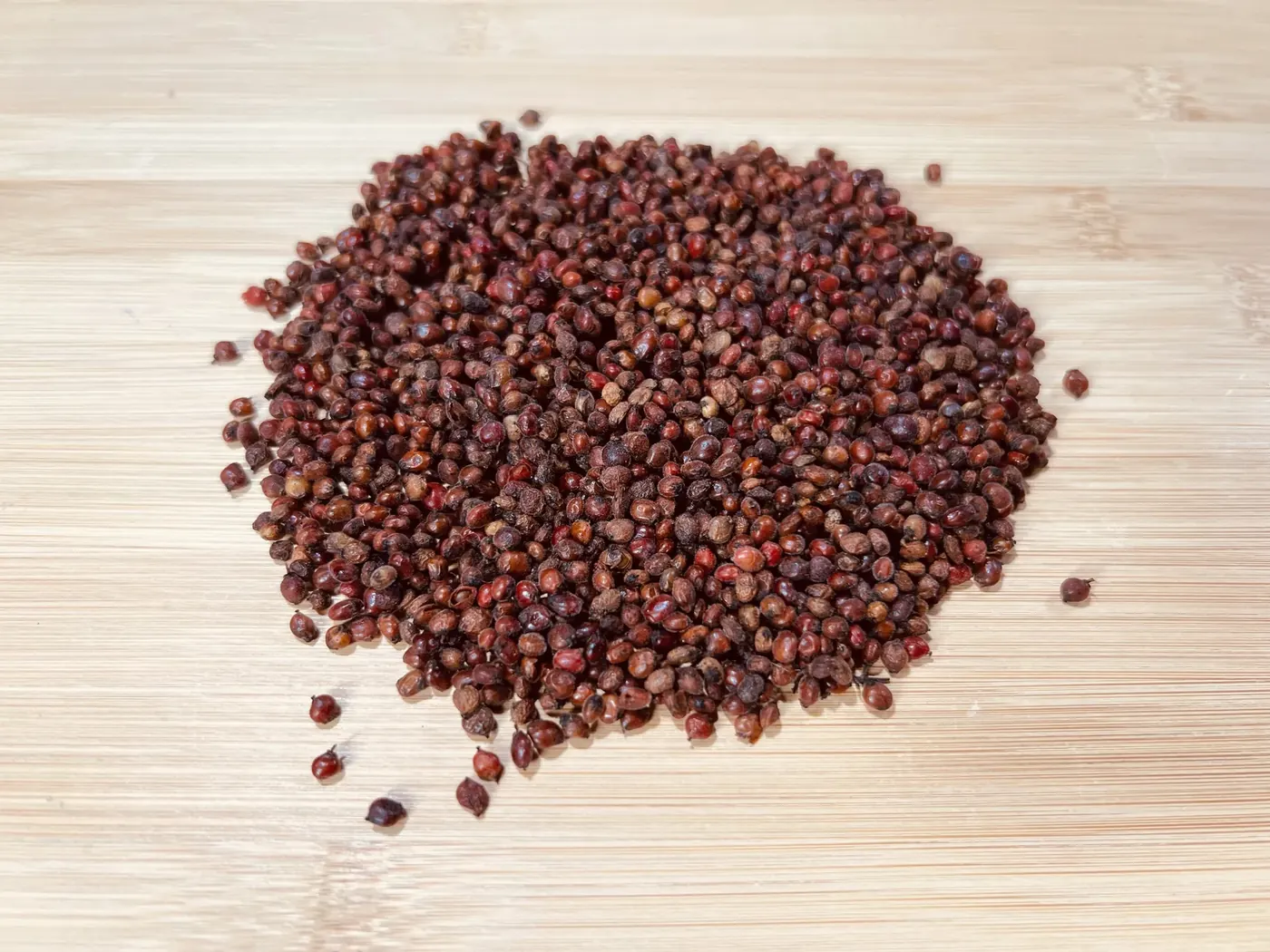
We grow and hand-harvest winged sumac in Arkansas, and its seeds are about as stubborn as native seeds get, so we use it as the worked example throughout. The same steps work for many other natives. For everything specific to sumac, our winged sumac planting guide has the full method.
Why Some Native Seeds Won't Sprout: Seed Dormancy in Plain Words
Dormancy is a seed's way of not sprouting at the wrong time. A seed that germinated in a warm October week would be killed by the first hard freeze, so many native plants build in a delay. There are two main kinds, and knowing which one you are dealing with tells you what to do.
- Physical dormancy (a hard coat). The seed coat is hard and waterproof, so the seed cannot soak up water no matter how long it sits in damp soil. In the wild, fire, heat, soil microbes, or years of weathering eventually crack it. At home, you crack it by scarifying.[1]
- Physiological dormancy (needs a winter). The coat lets water in, but the embryo inside is chemically "switched off" until it has spent weeks cold and moist. Cold, moist stratification is the fix.[7]
- Both at once. Some seeds carry both locks. Fragrant sumac and eastern redbud, for example, need the coat opened and then a cold spell.[1][2] These must be done in order: scarify first, then chill, because the cold only works on a seed that has taken up water.
Winged sumac's main barrier is its hard coat, and the Forest Service seed manual lists it among the sumacs that do not strictly need a cold period.[1] That is why our method starts with hot water, the essential step. We follow it with a cold, moist rest in the fridge because about two months of chilling is the standard advice for sumac seed and gives a more even start. It is the same routine that ships printed with every order.
How to Scarify Seeds at Home
Scarifying just means damaging the seed coat enough to let water in, without hurting the embryo inside. Two home methods cover nearly every native seed.
Hot-Water Soak
- Put the seeds in a heatproof bowl or mug.
- Bring water to a full boil, take it off the heat, and pour it over the seeds until they are covered by a couple of inches.
- Leave them to soak as the water cools to room temperature, 12 to 24 hours in all.
- Drain. Seeds that look plumper have taken up water and are ready for the cold step.
Sandpaper or File
- Best for larger seeds you can hold, such as redbud or New Jersey tea.
- Rub each seed a few strokes on fine sandpaper or a nail file until the shiny outer coat looks dull or slightly lighter in one spot.
- For small seeds, put them between two sheets of sandpaper and rub gently.
- Stop as soon as the coat is scuffed. Grinding deep into the seed kills it.
You may read about soaking seeds in sulfuric acid. Nurseries and seed labs do use it, and it is the standard treatment listed for sumac in the USDA Forest Service seed manual.[1] It needs protective gear, careful timing, and safe disposal, and too long a soak destroys the seed. It is not a home method. Hot water does the job for winged sumac.
How to Cold Stratify Seeds in the Fridge
Cold-moist stratification copies a winter in the soil: cold, damp, and dark, for weeks at a time. Most kitchen refrigerators already sit at the right temperature.
Dampen a Medium
- Use clean sand, vermiculite, peat, or a paper towel.[7]
- Wet it, then squeeze out the extra. It should feel like a wrung-out sponge. Too wet invites mould.
Mix in the Seeds
- Stir seeds into a few times their volume of sand or vermiculite, or fold them inside the paper towel so every seed touches something damp.
- Scarify first if your species needs it.
Seal and Label
- Put the mix in a zip-top bag or lidded jar.
- Write the plant name, the date in, and the date out on the bag. Weeks later you will not remember.[6]
Refrigerate at 33 to 40°F
- The main body of the fridge, not the freezer.[7]
- Length depends on the species, usually 30 to 90 days. Winged sumac gets 30 to 90 days at 35 to 40°F, with 60 to 90 days as a strong target.
Check Every Week or Two
- Still damp? If it is drying, give it a light spray of water.
- Any fuzz or sour smell? See the troubleshooting section below.
- Any white root tips? Those seeds are ready. Sow them now.
Sow Promptly
- When the time is up, sow within a week or two. Do not let stratified seeds dry back out.[8]
- Give them light and spring temperatures. In trials, winged sumac sprouted best with days around 68°F and cooler nights around 50°F, so a bright spot at spring temperatures suits it.[1] Sprouts often show within 2 to 6 weeks; some seeds wait longer.
Winter Sowing: Outdoor Cold Stratification
Before refrigerators, every native seed was stratified outdoors, and it still works. You trade some control for less work. Germination is usually slower and more uneven, and some seeds may wait until the following spring.
Sow in the ground in late fall
- Scarify hard-coated seeds first, then sow in late fall or early winter at the depth your species needs. For winged sumac, sow about 1/2 inch deep (the Wildflower Center gives 1/3 to 3/4 inch) in a sunny, well-drained spot.[1][12]
- Mark the spot clearly so nobody digs or mows it over winter.
- Winter cold and moisture handle the stratification. Sprouts appear as the soil warms in spring.
Milk-jug winter sowing
- Wash a gallon milk jug, punch drainage holes in the bottom, and leave the cap off.[9]
- Cut it around the middle, leaving a small hinge, and fill the bottom with about 3 inches of moist, well-draining potting mix.
- Sow, tape the jug shut, label it, and set it outside where sun, rain, and snow reach it through the open top.
- When seedlings appear in spring, open the jug on warm days so they do not overheat, and transplant once they are 2 to 3 inches tall with true leaves.
Milk jugs are a good fit for small perennials like milkweed and coneflower. For a shrub like winged sumac, sowing straight into its permanent spot in late fall is simpler, because the young plants put their early energy into roots.
What Common Native Seeds Need
These are starting points from university and Forest Service sources. Seed lots vary, so if you buy seed, follow the seller's instructions first.
| Plant | Main lock | What to do |
|---|---|---|
| Winged sumacRhus copallinum | Hard coat | Hot-water soak, then 30 to 90 days cold and moist (60 to 90 is a strong target). Or scarify and sow outdoors in late fall. |
| MilkweedsAsclepias | Needs cold | No scarifying. About 30 days cold and moist suits most native milkweeds, including butterfly weed; a few species want 60 to 90.[6] |
| Purple coneflowerEchinacea purpurea | Needs cold | No scarifying. About two months cold and moist improves germination, or sow outdoors in late fall.[10] |
| Eastern redbudCercis canadensis | Both | Scarify (sandpaper or hot water), then about 30 to 60 days cold. Or scarify and sow outdoors in fall.[2][11] |
| New Jersey teaCeanothus americanus | Both | A brief hot-water treatment, then about 60 days cold and moist gave the best results in a university trial.[3] |
| ElderberrySambucus | Both, and slow | About 60 to 90 days warm and moist, then at least 90 days cold. Most home growers sow outdoors in late summer or fall and let the seasons do it.[4] |
| American beautyberryCallicarpa americana | Hard coat | Untreated seed sown outdoors in fall has given good spring germination. Fridge results have been poor in tests.[5] |
When to Start Cold Stratification: Count Back From Your Last Frost
Start with the date you want to sow. For seeds going straight outside, that is usually around your average last frost date, once the soil is starting to warm. For seeds in pots indoors, it can be a few weeks earlier. Your county extension office can tell you your local last frost date. Then count back by the cold period your seed needs, and add a week of slack so you are never rushed.
| Cold period | Into the fridge | If you sow on April 1 |
|---|---|---|
| About 30 daysmost milkweeds | 5 weeks before sowing | Late February |
| About 60 daysconeflower, New Jersey tea, redbud | 9 to 10 weeks before sowing | Late January |
| 60 to 90 dayswinged sumac | 9 to 13 weeks before sowing | Early to late January |
For winged sumac, that matches our planting guide: start the cold rest 8 to 12 weeks ahead, which means late January or early February for an April or May planting. If you would rather skip the calendar entirely, scarify and sow outdoors in late fall.
Worked Example: Winged Sumac From Packet to Pot
Here is how it comes together for one batch of winged sumac, planned for an early April sowing.
- Early January: pour just-boiled water over the seeds and let them soak overnight as it cools.
- Next morning: drain, mix with slightly moist sand, bag, label, and refrigerate at 35 to 40°F.
- Every week or two: check moisture and look for mould or early sprouts.
- Early April: sow about 1/2 inch deep in pots in a bright, sunny spot. Sprouts often show within 2 to 6 weeks; some seeds wait longer, so do not worry when they come up unevenly.
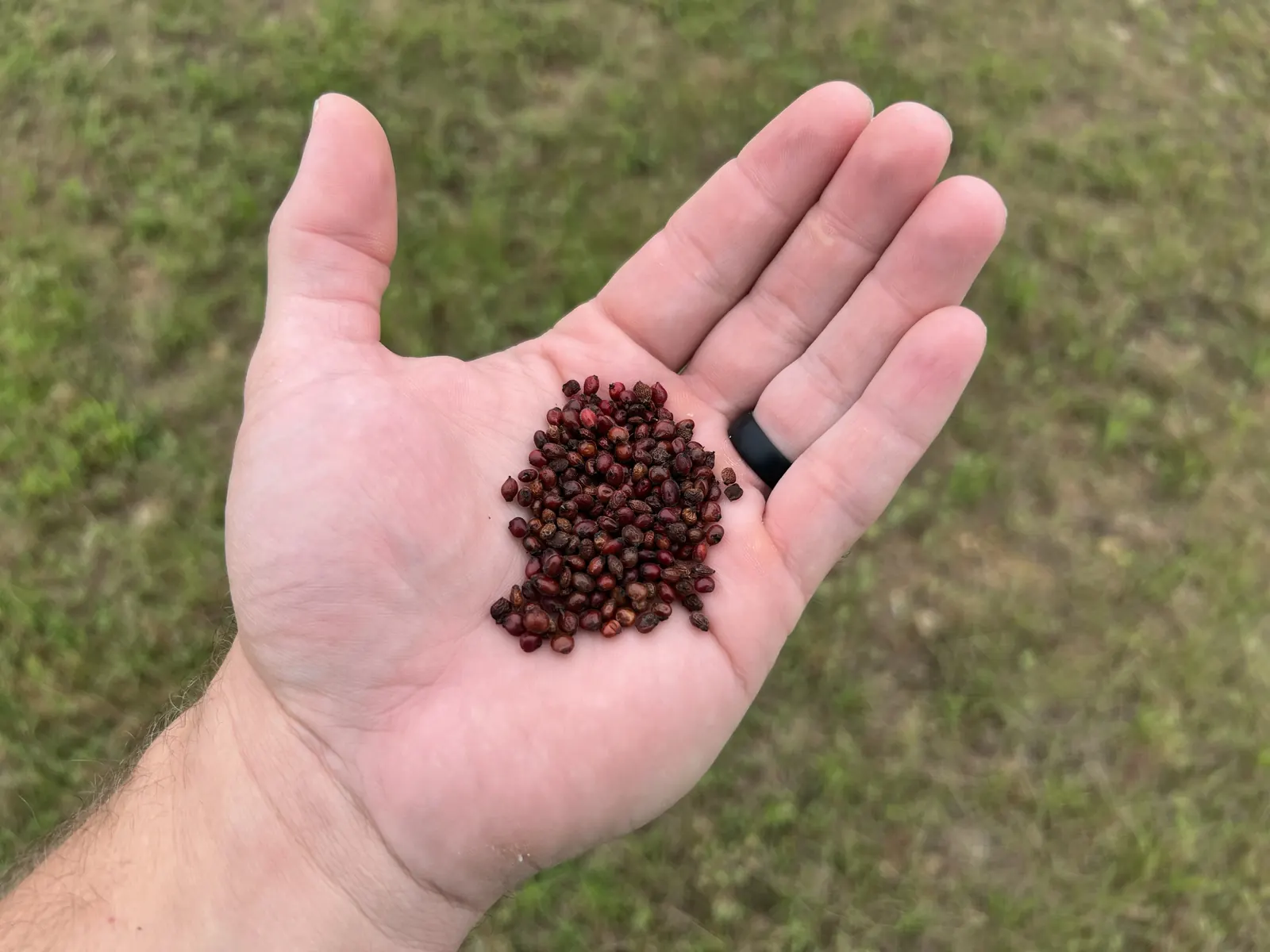
We tell customers to plan on roughly 30 to 40 percent germination. Wild sumac seed varies a lot from batch to batch (the Forest Service records 25 to 75 percent for smooth sumac), so sow more than you need.[1] Unused seed keeps well in a sealed envelope somewhere cool and dry, and the sumac seed guide covers storage and buying. Once your plants are up, they feed birds and pollinators for years.
Troubleshooting Cold Stratification
Mould in the bag
- A little fuzz on a paper towel is common and the seeds are often fine.[6] Squeeze a seed: firm means alive, soft and squishy means dead.
- Move healthy seeds to fresh, less-wet medium and throw out the mouldy material. Next time, wring the medium out harder.
Nothing is sprouting
- Check temperature and light first. After the cold, seeds need spring conditions. In trials, winged sumac sprouted best with days around 68°F and cooler nights around 50°F, so a bright spot at spring temperatures suits it.[1]
- Check the coat. If hard-coated seeds never swelled, the scarifying did not take. Re-treat a few and try again.
- Give it time. Native seed comes up unevenly on purpose, and some seeds wait a full year. Keep the pots lightly moist, never soggy, before you give up.
Seeds sprouting in the fridge
- That is good news. It means the batch is ready. Pot up the sprouted seeds right away, handling them gently because new roots snap easily, and sow the rest within a few days.
Seed Stratification Questions
Can I use the freezer instead of the fridge?
No. Fridge stratification works because the seeds sit moist and just above freezing, at 33 to 40 degrees F. A freezer is far colder than that and is not a shortcut. Outdoors, seeds do freeze and thaw over winter, which is why winter sowing works, but indoors stick to the fridge.
Can I stratify seeds and then store them for later?
It is better not to. Once the cold period is done, sow within a week or two. Stratified seeds that dry back out can lose vigor or fall back into dormancy. Keep unused seeds dry and untreated until you are ready to start.
Do I need to scarify every native seed?
No. Scarifying only helps seeds with a hard, waterproof coat, such as sumacs, redbud, and New Jersey tea. Milkweed and coneflower seeds take up water on their own and only need the cold, moist rest. Check what your species needs before you start.
Do your winged sumac seeds come pre-treated?
No. Our seeds ship clean, dry, and untreated so they store well. You do the hot-water soak and the cold rest at home when you are ready to plant, using the steps in our planting guide.
More sumac growing questions are answered in our FAQ. If you are planting a slope or a wildlife strip, see native shrubs for erosion control and native plants for birds and pollinators.
Ready to Start Some Winged Sumac?
Hand-harvested in Arkansas, native to 34 states, hardy in Zones 4 to 9. Packs from 200 seeds ($14.99) to 3,000 seeds ($94.99), with free shipping and a printed planting guide in every order.
Shop Seed PacksSources
12 references- USDA Forest Service, Woody Plant Seed Manual, Rhus (sumac) chapter. Hard seed coat, acid and hot-water scarification, about 2 months cold stratification (not strictly required for winged, smooth and staghorn sumac), sowing at least 1.3 cm (1/2 inch) deep, total darkness reducing germination of smooth and prairie sumac, best winged sumac germination at alternating 20/10°C (about 68/50°F), and 25 to 75 percent germination recorded for smooth sumac. fs.usda.gov/nsl/Wpsm/Rhus.pdf
- USDA Forest Service, Woody Plant Seed Manual, Cercis (redbud) chapter. Hard coat plus embryo dormancy; scarification followed by 28 to 60 days of cold stratification for eastern redbud. fs.usda.gov/nsl/Wpsm/Cercis.pdf
- Stewart, J.R. and McGary, I. 2010. Brief exposure to boiling water combined with cold-moist stratification enhances seed germination of New Jersey tea. HortTechnology 20(3): 623 to 625. Summary via the USDA Forest Service Reforestation, Nurseries and Genetic Resources program. rngr.net/publications/fnn/2011-winter
- USDA Forest Service, Woody Plant Seed Manual, Sambucus (elder) chapter. Warm stratification for 60 to 90 days followed by at least 90 days of cold. fs.usda.gov/nsl/Wpsm/Sambucus.pdf
- USDA Forest Service, Woody Plant Seed Manual, Callicarpa (American beautyberry) chapter. Hard seed coat; untreated fall-sown seed germinated well in spring. fs.usda.gov/nsl/Wpsm/Callicarpa.pdf
- Oklahoma State University Extension, HLA-6503, Native Milkweed Germination Guide (2023). 30-day cold-moist stratification for most native milkweeds, labelling, and mould checks. pods.okstate.edu/fact-sheets/HLA-6503.pdf
- University of Illinois Extension, Good Growing, "Seed stratification: what seeds require cold treatment." Refrigerate at 33 to 40°F in damp paper towel, sand, peat, or vermiculite for one to three months. extension.illinois.edu/blogs/good-growing
- USDA Forest Service, Woody Plant Seed Manual, Cercis chapter. Stratified redbud seed lost germination when left to dry for more than 6 days; sow promptly. fs.usda.gov/nsl/Wpsm/Cercis.pdf
- University of Missouri Extension, YM105, Winter Sowing Seeds. Milk-jug preparation, potting mix depth, placement, and transplanting. extension.missouri.edu/publications/ym105
- Lady Bird Johnson Wildflower Center. Echinacea purpurea plant profile, propagation: two months of cold-moist stratification improves germination; fall sowing outdoors. wildflower.org/plants/result.php?id_plant=ECPU
- Lady Bird Johnson Wildflower Center. Cercis canadensis plant profile, propagation: scarify, then stratify 30 to 60 days, or scarify and plant outdoors in fall. wildflower.org/plants/result.php?id_plant=CECA4
- Lady Bird Johnson Wildflower Center, Native Plant Database. Rhus copallinum propagation: plant scarified seed 1/3 to 3/4 inch deep. wildflower.org/plants/result.php?id_plant=RHCO