Sumac Lemonade
Sumac-ade from ripe red sumac berriesEvery year, once the berry clusters on our winged sumac turn deep red, from late summer into fall, we start a pitcher of sumac lemonade. It tastes like pink lemonade with a fruity, slightly cranberry edge, and it takes nothing but ripe berries, cold water, and a little sweetener.
The recipe is right below. After it you will find everything that makes the difference between a bright, tart glass and a dull or bitter one: when to pick, how to tell a ripe cluster by taste, why the water has to be cold, and how to strain out the fine hairs. We finish with sumac tea, a few variations, and an honest look at what is actually in the glass.
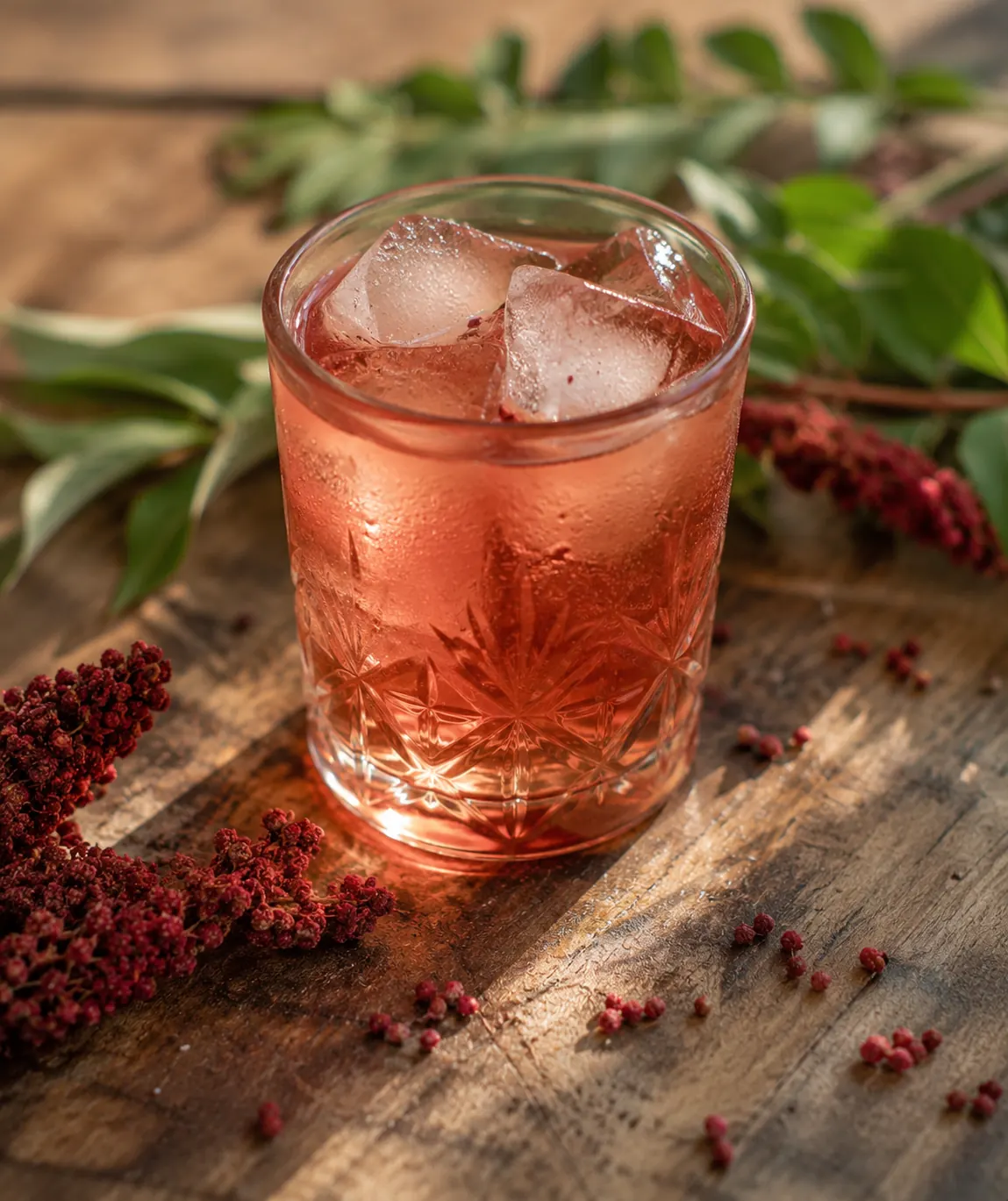
Classic Sumac Lemonade (Cold-Soak Sumac-ade)
Ingredients
- 3 to 4 large ripe red sumac berry clusters
- 1 quart (4 cups) cold water
- Honey, sugar or maple syrup to taste
- Ice, for serving
- Optional: a few mint leaves or a slice of lemon
Method
- Check the clusters. Snip off any thick stems and look the clusters over for insects and webbing. Shake them out over a sheet of paper rather than rinsing them, because rinsing washes away the tart coating you want.
- Break them up. Pull the clusters apart with your fingers into a large pitcher or jar, rubbing them lightly to loosen the berries. There is no need to mash them hard.
- Cold soak. Pour in the cold water so the berries are covered. Let it steep for 2 to 4 hours at room temperature or in the refrigerator, swirling now and then. Taste at 2 hours and stop when it is pleasantly tart. Never use hot water.
- Strain twice. Pour through a fine-mesh sieve to catch the berries and stems, then strain again through a clean cotton cloth, a few layers of cheesecloth or a coffee filter to remove the fine hairs.
- Sweeten and serve. Stir in honey, sugar or maple syrup to taste, pour over ice, and add mint or a slice of lemon if you like.
Want it stronger? Add another cluster rather than steeping longer. If you strip the berries off the stems first, Eat the Weeds suggests one to two cups of berries per quart of water.[3] The finished drink should be a clear rosy pink.
Pick Only Red, Fuzzy Sumac Clusters
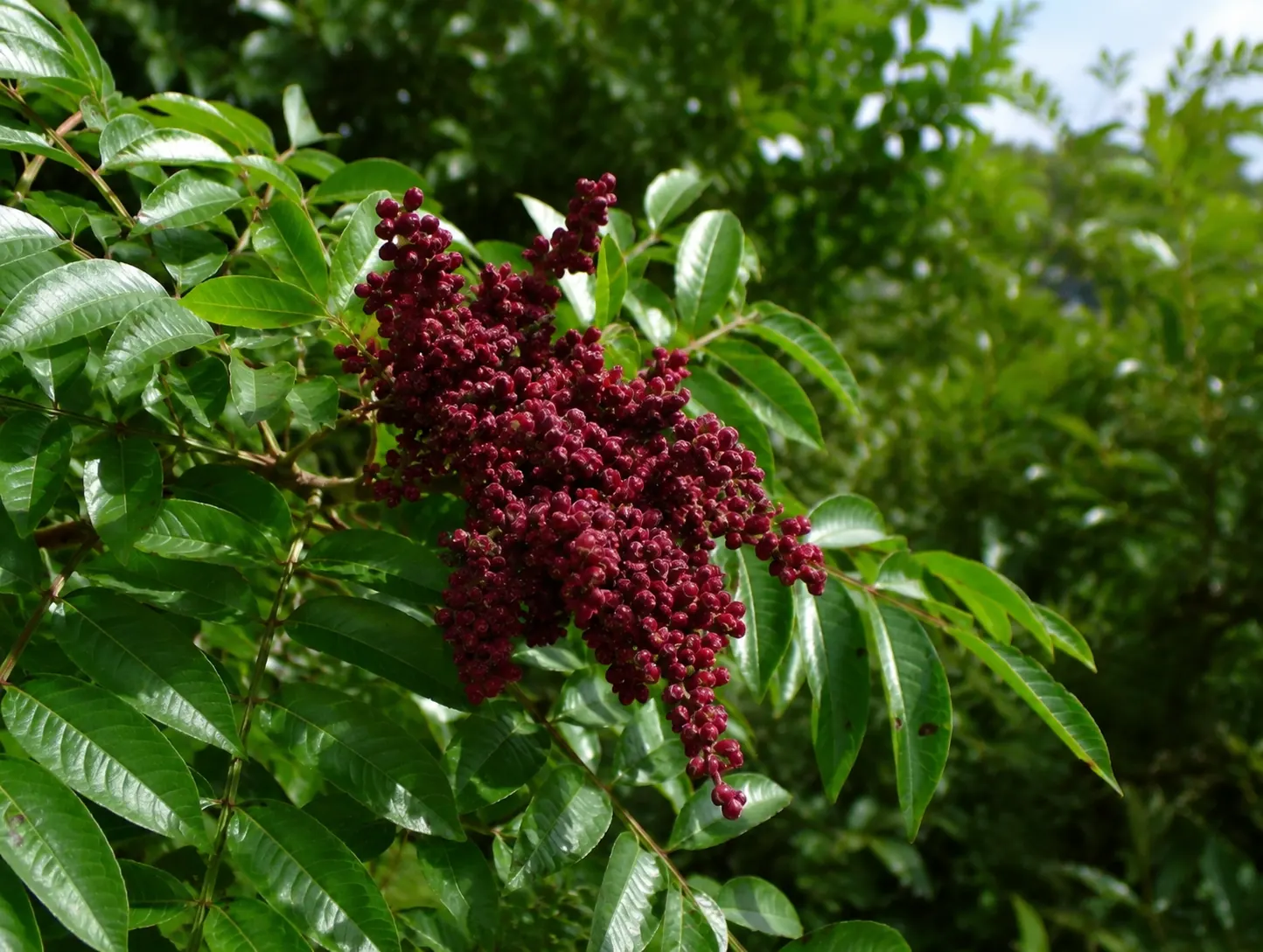
Edible sumacs, including winged, smooth and staghorn sumac, carry dense clusters of fuzzy red berries at the tips of the branches. On winged sumac the heavy clusters often lean or nod a little, but they stay packed tight and red.[4] Poison sumac is a different plant that grows in wet, swampy ground and carries smooth, whitish or cream berries in loose clusters hanging from along the stem, where the leaves join it.[3][1] Never use it. If the berries are white or cream, walk away.
Sumac belongs to the same plant family as cashews, mangoes and pistachios. In a Dutch study of children with suspected cashew allergy, some were also sensitized to other plants in the cashew family (the study tested mango, pink peppercorn and sumac), though what that means for real reactions is not yet known. If you have a tree-nut allergy in that family, talk to your allergist before you drink sumac.[6] The Missouri Department of Conservation also notes that sumac berries may carry trace amounts of the chemicals that cause poison ivy rash, and that a very small number of people who are highly sensitive to poison ivy may have a strong allergic reaction to drinking sumac tea. If that is you, skip it.[8] For a full side-by-side, see winged sumac vs. poison sumac.
When to Harvest Sumac Berries for Lemonade
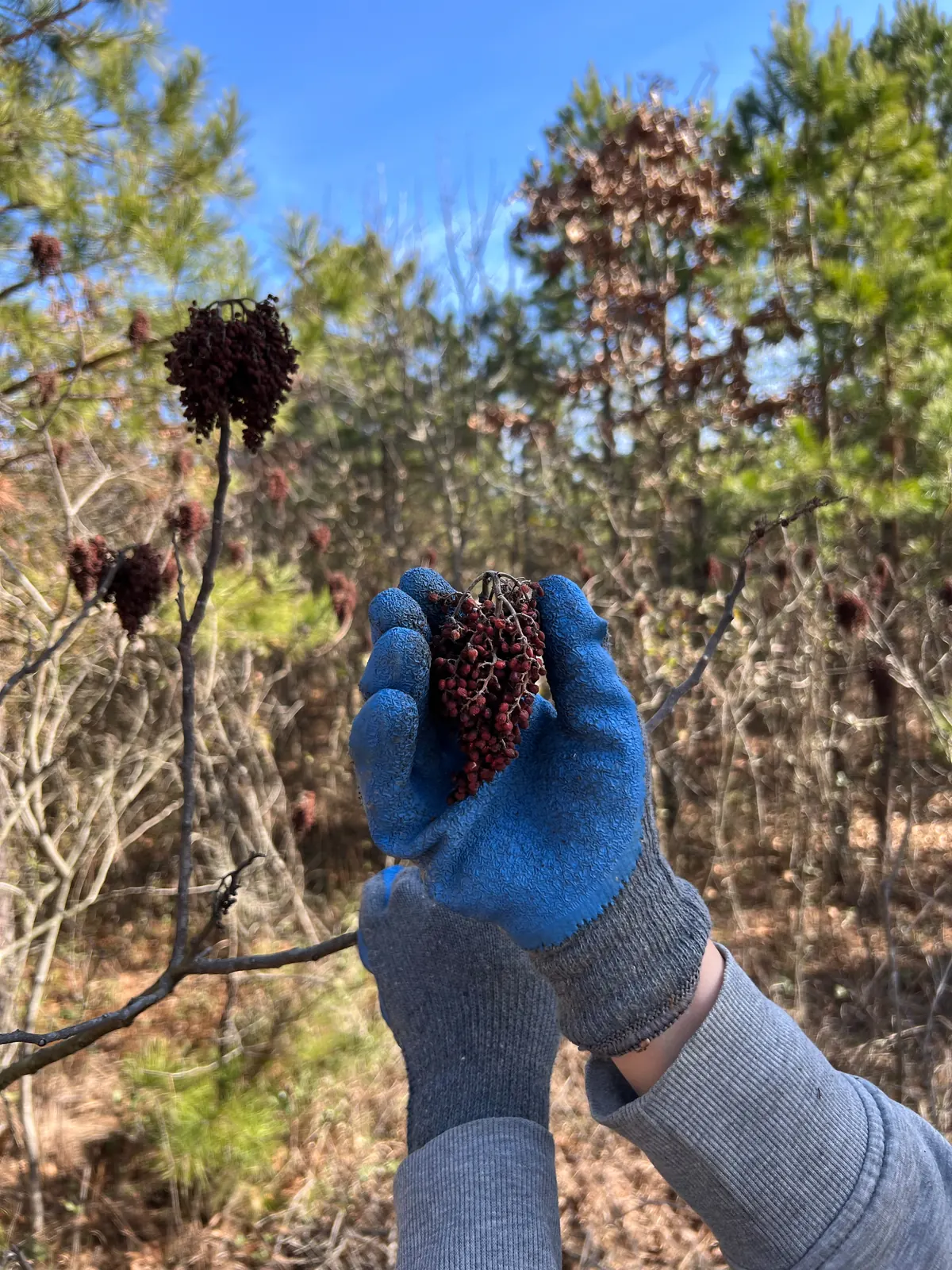
The tart flavor sits on the outside of each berry, in a sticky coating on the fine red hairs. That coating dissolves in water, which is why it makes such a good drink and also why timing matters so much.[3]
- Wait for full color. Sumac clusters come ripe from mid to late summer. Winged sumac blooms later than its cousins, from July into September, so its clusters tend to ripen from late summer into fall.[5]
- Do the lick test. Touch a berry, then touch your tongue. If it is sharply sour, the cluster is ready. If it tastes of nothing much, keep looking.[3]
- Beat the rain. Pick after a few dry days. A hard rain washes the coating off, and a cluster that was perfect yesterday can taste flat today.[3]
- Check for bugs. Sumac clusters are a favorite hiding place for small insects. Look inside before you cut, and leave any cluster that is webbed or full of droppings.
- Leave plenty behind. The same clusters feed birds well into winter, so take a few from each plant, not the lot.
Clusters that have hung through fall and winter darken and lose most of their tang. They are still useful for seed, which is how we gather the seeds we sell, but they make a weak drink.
Why Sumac Lemonade Needs Cold Water
The sour part of sumac, mostly malic acid (the same acid that makes green apples tart), rinses off the berries easily in cold water. The seeds and stems hold tannins, the same dry, puckery compounds you taste in over-steeped black tea. Hot or boiling water pulls those tannins out quickly and turns the drink bitter and harsh.[3] Michigan State University Extension recommends cold water too, and notes that heat can also destroy some of the vitamin C.[1]
A cold soak takes longer but asks nothing of you. Some foragers leave it in the refrigerator overnight.[1] We find 2 to 4 hours is plenty for fresh clusters, and longer mostly adds astringency. Taste as you go.
Straining out the fine hairs
Each berry is covered in short hairs, and they float free in the water.[5] They are harmless in small amounts but scratchy in the throat. A kitchen sieve catches the berries but lets the hairs through, so do a second pass through a tight cloth, layered cheesecloth or a coffee filter. Eat the Weeds recommends filtering twice for this reason.[3] If the drink still looks hazy with specks, run it through once more.
Sweetening
Sumac-ade is pleasant unsweetened if you like it sharp, but most people prefer a little sweetness. Honey is traditional and dissolves easily if you stir it into a splash of warm water first. Sugar and maple syrup both work. Start with about two tablespoons per quart and adjust.
Sumac Lemonade Variations
- Sparkling sumac-ade. Make a double-strength batch with half the water, strain and sweeten it, then top each glass half and half with sparkling water.
- Iced tea blend. Mix sumac-ade half and half with cold black tea or hibiscus tea for an Arnold Palmer-style drink.
- Frozen pops. Pour sweetened sumac-ade into ice-pop molds. Make it a little sweeter than you would drink it, because freezing dulls sweetness.
- Simple syrup concentrate. Strain a strong cold-soak batch, then warm the strained liquid with an equal amount of sugar just until the sugar dissolves. The berries and stems are already gone, so a little warmth at this stage will not pull out tannins. Keep it in the fridge and stir a spoonful into water, sparkling water or cocktails.
How to Make Sumac Tea
Sumac tea is the warm cousin of sumac lemonade, and the same rule applies: warm water, never boiling. Boiling water draws bitterness out of the seeds very fast.[3] Water that is hot to the touch but well short of a boil gives you a rosy, lemony cup.
Simple Sumac Tea
Ingredients
- 1 large ripe sumac berry cluster (or 2 small)
- 2 cups warm water, about 160°F (70°C), not boiling
- Honey to taste
Method
- Break up the cluster gently to expose the berries.
- Pour the warm water over the berries in a heatproof jug or French press.
- Steep 10 to 15 minutes, tasting at 10. Stop as soon as it tastes bright and lemony.
- Strain well through cloth or a coffee filter to remove the fine hairs. Sweeten and serve warm.
Storing Sumac Lemonade and Sumac Berries
The drink: sumac-ade is an uncooked infusion, so treat it like fresh juice. Keep it covered in the refrigerator and drink it within a few days. If it turns cloudy, fizzy or smells off, pour it out.
The berries: to enjoy sumac-ade after the season ends, dry whole clusters in a warm, airy spot indoors, then store them in a sealed jar away from light. Dried clusters make a softer but still good drink. Our guide to edible sumac and culinary uses covers drying in detail, along with grinding the berries into sumac spice for cooking.
Sumac Lemonade Benefits: What Is Actually in the Glass
We would rather be straight with you than sell you a miracle. Sumac lemonade is a tasty, low-cost, homegrown drink. Here is what the sources support:
- Natural tartness. The sour taste comes from malic acid and related plant acids on the berry surface, so you get a lemony drink without lemons.[3]
- Some vitamin C. Extension writers in Michigan and Arkansas both describe sumac as a source of vitamin C.[1][2] Nobody has measured how much ends up in a homemade glass, so do not count on it as your daily dose.
- Polyphenols. Lab studies of sumac fruit, including staghorn sumac, find it rich in polyphenols that show antioxidant activity in the test tube.[7] That is a property of the fruit, not a proven health effect of drinking sumac-ade.
- Sweetness is up to you. Because you sweeten it yourself, you control how much sugar goes in.
Sumac lemonade does not treat or cure anything. Enjoy it for what it is: a cold, pink, tart glass of summer that you can grow in your own yard. If you have questions about the plant itself, our FAQ and winged sumac profile are good next stops, and types of sumac covers the other edible species.
Grow Your Own Sumac Lemonade Patch
A small patch of winged sumac gives you red clusters every year from late summer, plus fall color and food for birds. Only female plants bear berries, so grow several from seed rather than just one.[5] Our hand-harvested Arkansas seeds come in packs from 200 to 3,000 with free shipping, and our planting guide walks you through getting them started.
Shop Seed PacksSources
8 references- Michigan State University Extension. Making sumac tea (cold-water soak, straining through a coffee filter or cheesecloth, vitamin C, poison sumac has white berries and grows in wetlands). canr.msu.edu/news/making_sumac_tea
- University of Arkansas Division of Agriculture, Cooperative Extension Service. Plant of the Week: Smooth Sumac (pink lemonade-like drink, straining through cheesecloth, vitamin C). uaex.uada.edu/yard-garden/resource-library/plant-week/smooth-sumac.aspx
- Green Deane, Eat the Weeds. Sumac: More Than Just Native Lemonade (malic acid on the berry hairs, harvest before rain, taste test, filtering twice, tannins in the seeds, bitterness from hot water, poison sumac identification, allergy note). eattheweeds.com/sumac-more-than-just-native-lemonade
- Lady Bird Johnson Wildflower Center. Rhus copallinum species profile (dark red, hairy fruit in drooping, pyramidal clusters; bloom in July and August). wildflower.org/plants/result.php?id_plant=RHCO
- NC State Extension Gardener Plant Toolbox. Rhus copallinum (flowers July to September; dark red drupes covered with short hairs, appearing in fall and persisting into winter; separate male and female plants, both needed for fruit). plants.ces.ncsu.edu/plants/rhus-copallinum
- Bastiaan-Net S. et al. (2019). IgE Cross-Reactivity of Cashew Nut Allergens. International Archives of Allergy and Immunology 178(1): 19 to 32 (Dutch children with suspected cashew allergy; some also sensitized to mango, pink peppercorn and sumac; clinical relevance not yet known). karger.com/iaa/article/178/1/19/168275
- Nazir M. et al. (2025). Antioxidants and Antidiabetic Potential of Polyphenolic Fractions and Crude Extracts of Rhus typhina Fruit, Punica granatum Peel, and Terminalia catappa Leaves. Chemistry & Biodiversity (laboratory measures of phenolic content and antioxidant activity). pmc.ncbi.nlm.nih.gov/articles/PMC12270376
- Missouri Department of Conservation Field Guide. Sumacs (sumacs contain urushiols in some parts; berries may carry trace amounts; a very small number of people highly sensitive to poison ivy may have a strong allergic reaction to drinking sumac tea). mdc.mo.gov/discover-nature/field-guide/sumacs