Types of Sumac
A side-by-side guide for gardeners"Sumac" covers a whole family of tough, sun-loving shrubs and small trees. In most of North America, the ones you will actually meet along a fencerow or in a nursery are staghorn, smooth, winged, and fragrant sumac. Out West you add skunkbush, lemonade sumac, laurel sumac, and evergreen sumac.
We grow and sell only winged sumac seed, but we like all of them. This guide lays them out side by side so you can tell them apart and pick the one that suits your ground.
What Makes a Sumac a Sumac?
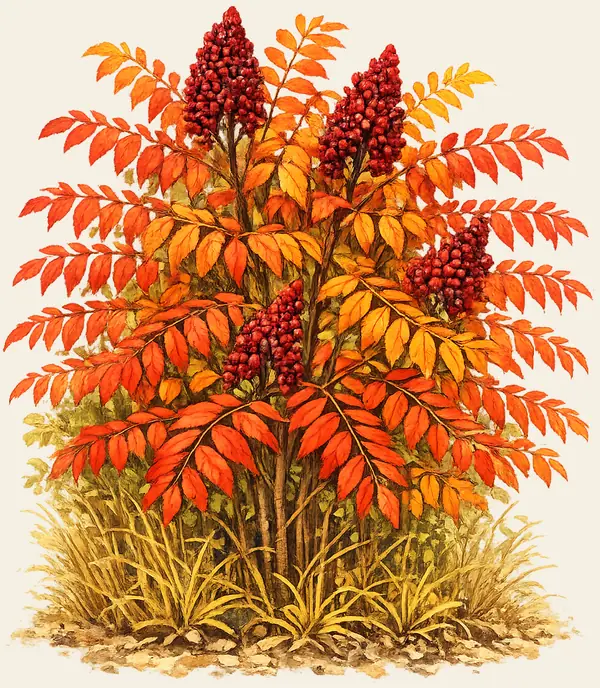
The sumacs in this guide belong to the genus Rhus in the cashew family, with one close cousin, laurel sumac, that botanists now place in its own genus, Malosma. Most of them share a family look: leaves made of many leaflets along a central stem, small greenish or yellowish flowers in clusters, and fuzzy, tart red berries packed into tight heads.
They also share habits. Nearly all of them want sun, put up with poor and dry soil, and spread by root suckers into colonies over time. That suckering is the single biggest thing to plan around, whichever sumac you choose.
Poison sumac is the exception to the name. It is Toxicodendron vernix, a different genus that grows in wet swamps and bogs and carries drooping clusters of whitish berries. It is not one of the plants on this page. If you want the full side-by-side on that one, see winged sumac vs poison sumac.
The Four Sumacs Most Gardeners Meet
Staghorn sumac (Rhus typhina)
The big one. Staghorn commonly reaches 15 to 25 feet, with stout branches that fork like antlers and young twigs covered in dense, velvety hair, which is where the name comes from. Leaves are long, with many toothed leaflets, and turn yellow, orange, and scarlet in fall. The fuzzy crimson berry heads hold well into winter. It is native to the northeastern United States and southeastern Canada, south along the Appalachians and west into the Great Lakes region, and it spreads by suckers into large colonies. Hardy to roughly zone 3 or 4 through zone 8.
Smooth sumac (Rhus glabra)
Staghorn's close look-alike, minus the fur. Smooth sumac twigs are hairless and often carry a whitish or bluish waxy bloom. It usually grows 10 to 15 feet and is often one of the first plants to turn bright red along roadsides in fall. Smooth sumac is widely cited as the only shrub native to all 48 contiguous states, so it is the sumac most likely to be wild near you, from prairie edges to old fields. It suckers freely and forms thickets.
Winged sumac (Rhus copallinum)
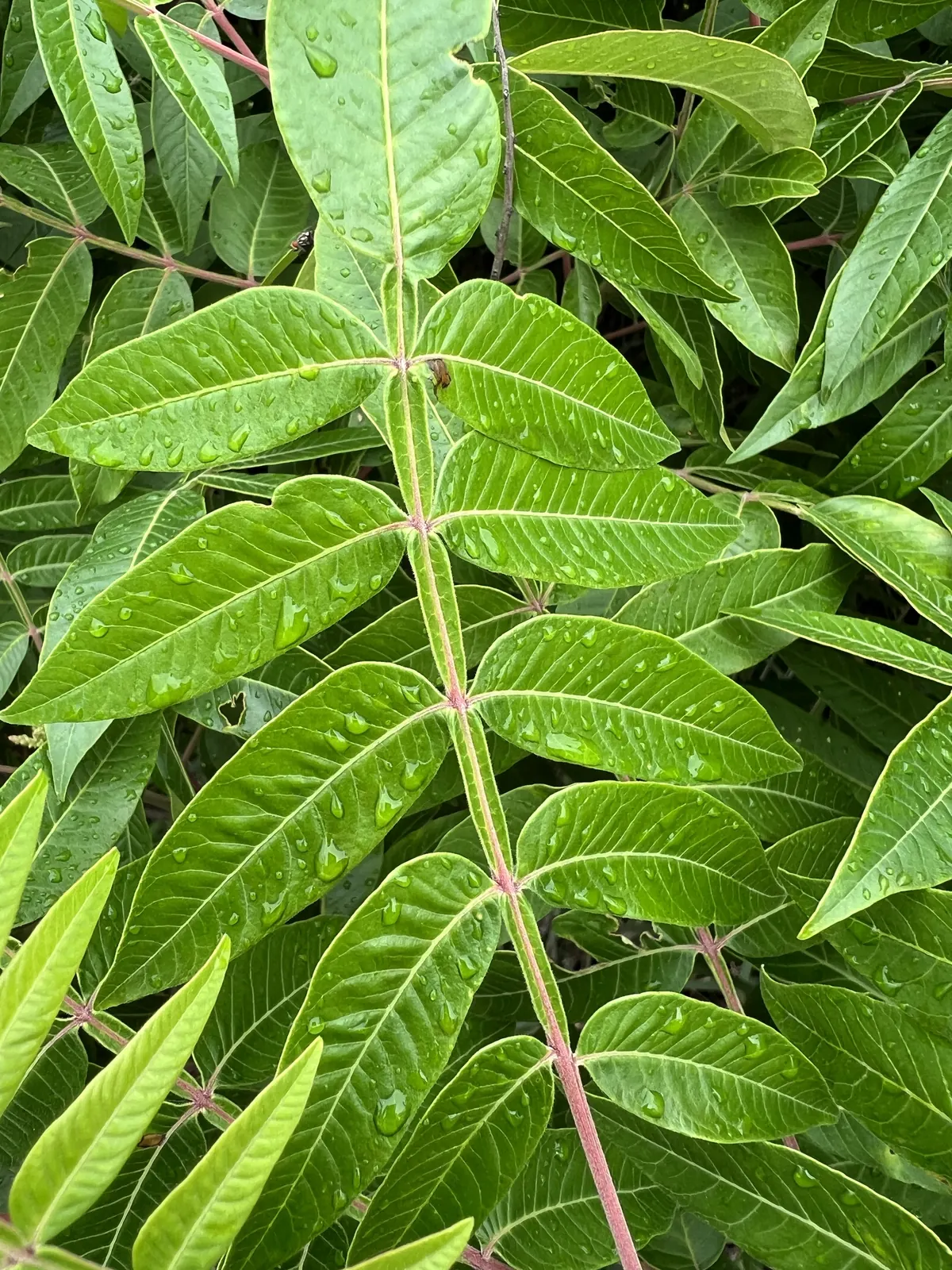
Also called shining sumac and flameleaf sumac. Its giveaway is the narrow strip of leaf tissue, the "wing," running along the leaf stem between the leaflets. The leaflets are glossy on top, the plant usually stays a 7 to 15 foot shrub, and the dense berry clusters, upright or drooping, ripen deep red from late summer into fall and hang on through winter. Only female plants bear berries. It flowers later than most sumacs, from about July into September, and its fall color is a glossy scarlet to burgundy that often shows ahead of the surrounding hardwoods. It is native from Texas and Oklahoma east to the Atlantic, and from Florida north to Maine and southern Ontario. Like its cousins, it spreads by root suckers.
Fragrant sumac (Rhus aromatica)
The low one. Fragrant sumac stays 2 to 6 feet tall and spreads wider than it is tall. Instead of a long row of leaflets, each leaf has just three, and they smell spicy when crushed. Small yellowish flowers open in early spring before the leaves, followed by small clusters of red, hairy berries in summer, and orange-to-red fall color. It is native across much of the country east of the Rockies and into Canada, hardy in zones 3 to 9, and spreads by root suckers into low thickets. Low selections such as 'Gro-Low' stay around 2 to 3 feet and are sold as groundcovers.
Spot the Difference in Ten Seconds
You can sort the four eastern sumacs with two quick checks. First, count the leaflets: three means fragrant sumac. Second, look at the leaf stem between the leaflets. A flat green wing of leaf tissue means winged sumac. Across most of winged sumac's range, no other sumac has these wings. In Texas and Oklahoma, prairie flameleaf sumac (Rhus lanceolata), a close relative, has the same winged leaf stem.
If there is no wing and many leaflets, feel a young twig. Velvety fuzz means staghorn. Smooth, often waxy-looking bark means smooth sumac. Staghorn and smooth sumac do cross where they grow together, so now and then you will find a plant that sits in between.
For more field marks, see our page about winged sumac.
Sumac Comparison Chart
Sizes are typical ranges for mature plants. Real plants vary with soil, water, and climate.
| Feature | StaghornRhus typhina | SmoothRhus glabra | WingedRhus copallinum | FragrantRhus aromatica |
|---|---|---|---|---|
| Height | 15 to 25 ft | 10 to 15 ft | 7 to 15 ft as a shrub, 20 to 30 ft as a small tree | 2 to 6 ft |
| Leaf | Many toothed leaflets | Many toothed leaflets, pale beneath | 9 to 21 glossy leaflets | Three leaflets, spicy when crushed |
| Twigs | Densely velvety | Hairless, often waxy bloom | Finely downy, not velvety | Slender, low and spreading |
| Wing on leaf stem | No | No | Yes | No |
| Fall color | Yellow, orange, scarlet | Bright red, orange, purple | Glossy scarlet to burgundy | Orange to red |
| Berry | Large fuzzy crimson heads, persist into winter | Red, finely hairy heads | Dense clusters, upright or drooping, deep red by early fall, persist through winter | Small red, hairy clusters in summer |
| Native range | Northeast US and southeast Canada, Appalachians, Great Lakes | All 48 contiguous states | Central and eastern US into southern Ontario | Much of North America east of the Rockies |
| Suckering | Strong, large colonies | Strong, thickets | Strong, colonies | Moderate, low thickets |
| Best use | Big spaces, slopes, bold small tree | Prairies, roadsides, wide climate range | Dry poor soil, wildlife, hedgerows, medium spaces | Groundcover on banks, small yards |
Swipe sideways on a phone to see every column.
Western and southwestern sumacs
| Feature | SkunkbushRhus trilobata | Lemonade sumacRhus integrifolia | Laurel sumacMalosma laurina | Evergreen sumacRhus virens |
|---|---|---|---|---|
| Height | 2 to 8 ft | 5 to 15 ft, low on the coast | 10 to 20 ft | 8 to 12 ft |
| Leaf | Three leaflets, strong smell when crushed | Simple, leathery, evergreen | Simple, aromatic, often folded like a taco shell | 5 to 9 glossy leaflets, evergreen |
| Fall color | Yellow, orange, red | Stays green | Stays green | Stays green |
| Berry | Sticky, red to orange-red, tart | Sticky, reddish, tart | Tiny, whitish | Red, hairy, on female plants |
| Native range | Western North America, Alberta and Saskatchewan to Texas | Coastal Southern California to Baja California | Southern California and Baja California | Texas, southern New Mexico, Arizona, northern Mexico |
| Best use | Dry western slopes, erosion control, thickets | Coastal hedges and bluffs | Large frost-free screens | Drought-tough screens in the Southwest |
Western and Southwestern Sumacs
Skunkbush sumac (Rhus trilobata) is the West's answer to fragrant sumac: three leaflets, a low, rounded shrub usually 2 to 8 feet tall, and leaves with a strong smell when crushed that some people find unpleasant and others do not mind. Its sticky red fruits are tart, and the USDA lists "lemonade sumac" as one of its other names. It forms thickets that shelter small birds and holds soil well on dry slopes.
Lemonade sumac (Rhus integrifolia), also called lemonade berry, is an evergreen shrub of coastal bluffs and canyons from Santa Barbara County into Baja California. Its leaves are single, leathery ovals rather than rows of leaflets, and the sticky, tart fruit was soaked in water to make a lemony drink. Near the ocean it often stays low and wide.
Laurel sumac (Malosma laurina) is a large evergreen shrub or small tree of Southern California chaparral, up to about 20 feet. The aromatic leaves often fold like a taco shell, and the fruit is small and whitish. It does not tolerate regular frost, though it resprouts from its woody base after fire or a hard freeze.
Evergreen sumac (Rhus virens) grows on rocky hillsides in Texas, southern New Mexico, Arizona, and Mexico. It is a multi-trunked shrub of roughly 8 to 12 feet with glossy, evergreen leaflets, white flowers from summer into fall, and red, hairy berries on the female plants.
Sumac Tree vs Sumac Shrub: Which Ones Become Trees?
Every sumac starts out as a shrub, and most stay one. A few will grow into small trees if you give them room and a little help.
- Staghorn sumac is the most tree-like eastern sumac. At 15 to 25 feet with a flat, spreading crown, it is often sold and used as a small tree.
- Winged sumac is usually a 7 to 15 foot shrub, but a single trunk in a good spot can grow into a small tree of 20 to 30 feet, and now and then up to about 35.
- Smooth sumac usually stays a large, multi-stemmed shrub around 10 to 15 feet.
- Laurel sumac, lemonade sumac, and evergreen sumac can all be grown as small, multi-trunked trees in the West and Southwest.
- Fragrant sumac and skunkbush stay shrubs. They are the ones to choose when you want something low.
To grow any of the taller ones as a tree, pick one strong stem, remove the lower branches gradually over a few years, and cut or mow the suckers that come up around it. Left alone, a sumac will always drift back toward a thicket.
Which Sumac Should I Plant?
There is no single best sumac. The right one depends on how much space you have, where you live, and what you want the plant to do. Here is our honest take.
- You have a big space and want drama: staghorn sumac. It is the largest, boldest, and most tree-like, and it does best in the cooler northern half of the country where it is native. Give it room, because the colony will grow.
- You want something native almost anywhere: smooth sumac. With a range covering all 48 contiguous states, it suits prairie plantings and naturalized roadsides from coast to coast.
- You want a low groundcover or have a small yard: fragrant sumac. At 2 to 6 feet, or about 2 to 3 feet for 'Gro-Low', it covers banks, fills beds, and stays below windows.
- You garden in the dry West: skunkbush for the interior, lemonade sumac or laurel sumac for frost-free coastal Southern California, and evergreen sumac for Texas and the Southwest.
Where winged sumac fits best
Winged sumac sits in the middle. It is bigger than fragrant sumac and smaller than staghorn, which makes it a good fit for a medium yard edge, a hedgerow, or a field border. A few things set it apart:
- Glossy leaves. The shiny leaflets give it a cleaner, more polished look in summer than the matte leaves of its cousins.
- Fall color that often shows early. The leaves turn glossy scarlet and burgundy, often ahead of the surrounding hardwoods.
- Late-summer flowers. Blooming from about July into September, it feeds bees and other insects later than most sumacs.
- Poor, dry soil. It tolerates thin, rocky, or sandy ground and suits the heat of the South and central states. It needs good drainage: it does poorly on wet sites and grows very slowly on poorly drained soil.
- Wildlife. The berry clusters feed songbirds and game birds through winter, and the leaves host the red-banded hairstreak butterfly and the luna moth. See wildlife benefits and game habitat for details.
The honest downsides: it needs sun, it suckers, and like any sumac grown from seed it takes patience. Our seed runs about 30 to 40 percent germination after proper treatment, and plants are hardy in zones 4 to 9. If winged sumac sounds right for your ground, our sumac seeds page and planting guide walk you through it, and you can order seed here.
Which Types of Sumac Are Edible?
The tart red berries of staghorn, smooth, winged, and fragrant sumac have all been used for a lemony drink, and so have the sticky fruits of skunkbush and lemonade sumac. The sour taste comes from the coating on the berries. The usual rule is simple: red berries in dense clusters at the branch tips on a sumac of well-drained ground. Only eat a plant you have identified with certainty. For how to harvest and use them, see edible sumac and culinary uses and our sumac lemonade recipe.
Types of Sumac: Common Questions
Which type of sumac grows the tallest?
Among the eastern sumacs, staghorn sumac is the tallest, commonly 15 to 25 feet. In coastal Southern California, laurel sumac can reach about 20 feet. Winged sumac usually stays a 7 to 15 foot shrub, and fragrant sumac stays low at 2 to 6 feet.
How do I tell staghorn sumac from smooth sumac?
Feel the young twigs. Staghorn sumac twigs are covered in dense, velvety hairs, like a deer's antlers in velvet. Smooth sumac twigs are hairless and often carry a whitish or bluish waxy bloom. Neither has the leafy wings along the leaf stem that winged sumac has.
Which sumac is best for a small yard?
Fragrant sumac is the easiest fit. It stays 2 to 6 feet tall, and low selections such as Gro-Low stay around 2 to 3 feet, so it works as a groundcover on banks and in beds. Winged sumac suits a medium-sized sunny spot if you are willing to mow or pull its root suckers.
Are the sumacs on this page poisonous to touch?
The red-berried sumacs on this page are not the plant people worry about. Poison sumac is Toxicodendron vernix, a different genus that grows in wet swamps and bogs and carries drooping clusters of whitish berries. If a sumac has fuzzy red berry clusters at the branch tips and grows on dry ground, it is not poison sumac.
More questions about winged sumac in particular? See our FAQ.
Grow Winged Sumac from Seed
Hand-harvested seed from native Arkansas stands, shipped free. Packs of 200, 500, 1,500, and 3,000 seeds, from $14.99.
Shop Seed PacksSources
17 references- The Morton Arboretum. Staghorn sumac (Rhus typhina) profile (height to about 25 feet, fall color, hardiness zones 4 to 8). mortonarb.org/plant-and-protect/trees-and-plants/staghorn-sumac
- Michigan State University Extension. Staghorn sumac (velvety hairs on young stems and leaf stalks, suckering colonies). canr.msu.edu/resources/staghorn_sumac
- Minnesota Department of Natural Resources, Minnesota Conservation Volunteer. Smooth sumac profile (only shrub native to all 48 contiguous states; typical height). dnr.state.mn.us/mcvmagazine/issues/2025/may-jun/profile.html
- Virginia Tech Dendrology. Smooth sumac (Rhus glabra) fact sheet (hairless twigs with a bluish waxy bloom). dendro.cnre.vt.edu/dendrology/syllabus/factsheet.cfm?ID=80
- NC State Extension Gardener Plant Toolbox. Rhus copallinum profile (winged rachis, July to September bloom, red fall color, suckering, host plant for red-banded hairstreak and luna moth). plants.ces.ncsu.edu/plants/rhus-copallinum
- USDA PLANTS Database. Rhus copallinum profile (native distribution). plants.usda.gov/plant-profile/RHCO
- Missouri Department of Conservation Field Guide. Fragrant sumac (three leaflets, flowers before the leaves, red hairy fruit, red and orange fall color). mdc.mo.gov/discover-nature/field-guide/fragrant-sumac
- USDA NRCS Plant Guide. Fragrant sumac, Rhus aromatica (native range east of the Rocky Mountains, fall color). plants.usda.gov/DocumentLibrary/plantguide/pdf/pg_rhar4.pdf
- USDA NRCS Plant Guide. Skunkbush sumac, Rhus trilobata (other names, thickets for cover, erosion control, fall color), with Utah State University Extension range plants profile (2 to 8 feet tall). plants.sc.egov.usda.gov/DocumentLibrary/plantguide/pdf/pg_rhtr.pdf
- California Native Plant Society, San Diego Chapter. Rhus integrifolia and Malosma laurina plant sheets (size, habitat, frost tolerance). cnpssd.org/s/rhusintegrifolia.pdf
- Oregon State University Landscape Plants. Rhus integrifolia (simple leathery leaves, acid fruit pulp used to flavor drinks). landscapeplants.oregonstate.edu/plants/rhus-integrifolia
- Native Plant Society of Texas. Evergreen sumac, Rhus virens (size, leaflets, bloom season, habitat). npsot.org/posts/native-plant/rhus-virens
- USDA Forest Service, Fire Effects Information System (FEIS). Rhus copallinum species review (20 to 30 ft as a small tree; fruit ripens September to October and persists through winter; very slow growth on poorly drained soils). research.fs.usda.gov/feis/species-reviews/rhucop
- Lady Bird Johnson Wildflower Center. Rhus copallinum (up to about 35 ft tall; drooping fruit clusters). wildflower.org/plants/result.php?id_plant=RHCO
- Missouri Department of Conservation Field Guide. Winged sumac (fruit clusters erect or drooping). mdc.mo.gov/discover-nature/field-guide/winged-sumac
- Virginia Tech Dendrology. Prairie sumac, Rhus lanceolata fact sheet (prominent wings on the rachis between the leaflets). dendro.cnre.vt.edu/dendrology/syllabus/factsheet.cfm?ID=931
- USDA NRCS Plant Fact Sheet. Winged sumac, Rhus copallinum (flowers July to September; only female plants produce seed). plants.sc.egov.usda.gov/DocumentLibrary/factsheet/pdf/fs_rhco.pdf